The sound of a car engine fading into the distance is a noise that haunts animal shelter staff across the country. For Barnaby, a twelve-year-old Golden Retriever mix, that sound marked the end of the only life he had ever known and the beginning of a terrifying uncertainty. Surrendered by a family who claimed they could no longer care for him due to a move, Barnaby was left standing on the cold concrete floor of a municipal intake center, his tail tucked low and his eyes scanning the door for a return that would never happen.
Stories like Barnaby’s are heartbreakingly common. According to data from the ASPCA, approximately 3.1 million dogs enter U.S. animal shelters nationwide every year. While puppies often find homes within days, a senior rescue dog like Barnaby faces grim odds. They are frequently overlooked for younger, more energetic animals, leaving them to deteriorate in high-stress kennel environments. However, Barnaby’s story did not end in a cage. Instead of just finding a quiet place to retire, this abandoned soul found something even more profound: a critical role in healing human hearts.
The Heartbreak of Abandonment
Shelter staff described Barnaby’s first week as agonizing to watch. He refused food for three days and spent most of his time curled in the back corner of his kennel, facing the wall. “He completely shut down,” said a kennel attendant at the facility where he was first processed. “It is a common reaction for senior dogs. They are grieving. They are confused. They wait for their people to come back, and when they don’t, the depression can be lethal.”
The physical toll of shelter life on an older dog is rapid. Without the comfort of a home environment, arthritis flares up on cold floors, and immune systems weaken due to stress. Barnaby was labeled “rescue only” due to his age and declining spirit—a designation that often precedes euthanasia in overcrowded facilities. However, his gentle demeanor caught the eye of a local liaison for a breed-specific rescue group, who saw a spark of something special in his weary brown eyes.
A Glimmer of Hope
Barnaby was pulled from the shelter just hours before he was scheduled to be moved to the critical list. He was transferred to a foster-based rescue organization that specializes in difficult-to-place animals. It was here, in a quiet foster home, that Barnaby began to decompress. His foster caretaker noted that while Barnaby had no interest in toys or running, he had an intense, almost gravitational pull toward people who were sitting quietly.
“He didn’t want to play fetch; he wanted to bear witness,” his foster mom reported. “If I was having a bad day and sat on the couch, he would press his forehead against mine and just breathe. He had a stillness that you don’t teach. It was innate.”
This unique trait eventually reached the ears of Sarah Jenkins (name changed for privacy), a coordinator for a local therapy dog program that works with hospice centers and veterans’ hospitals. She wasn’t looking for a pet; she was looking for a partner. When she met Barnaby, she knew immediately that this senior rescue dog had a capacity for empathy that far exceeded the norm.
The Senior Rescue Dog Becomes a Hero
Sarah officially adopted Barnaby, but his journey was far from over. At an age when most dogs are slowing down, Barnaby began training. While he didn’t need to learn how to be calm—that was his nature—he had to be certified to enter medical facilities. He passed his Canine Good Citizen test with flying colors, unbothered by dropping clipboards or loud wheelchairs.
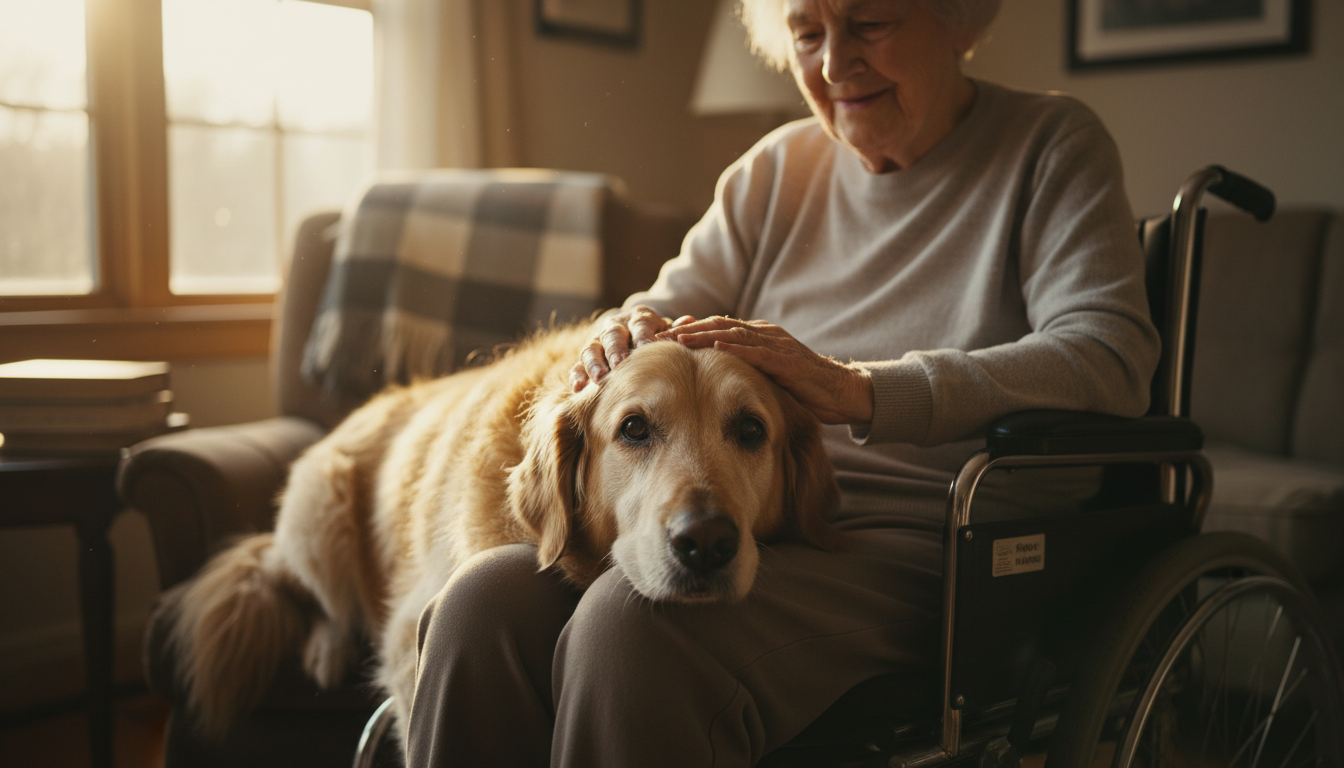
Barnaby’s new home wasn’t just a house with a yard; it was the entire community. He became a regular fixture at a nearby assisted living facility, specifically in the memory care unit. Staff at the facility reported that residents who hadn’t spoken in weeks would light up when Barnaby shuffled into the room. His slow pace, originally seen as a detriment in the shelter, matched the pace of the seniors he visited perfectly.
In one reported instance, Barnaby sat for an hour with a resident in hospice care, resting his chin on the bed while the family said their goodbyes. He provided a grounding, calming presence that allowed the human family members to focus on their loved one without the anxiety that often fills a hospital room.
More Than Just Adoption
For Barnaby, this role seemed to revitalize him. The dog who once faced the wall in a shelter kennel now wakes up with a purpose. Veterinary professionals suggest that working dogs, or dogs with a routine and social engagement, often maintain cognitive function longer than those who are sedentary. By finding a “job,” Barnaby found a reason to keep going.
His story highlights a crucial aspect of animal rescue that is often overlooked: the potential of senior animals to contribute to society. Organizations like The Grey Muzzle Organization provide grants to shelters specifically to help senior dogs like Barnaby get the medical care and exposure they need to find homes. These dogs bring a lifetime of experience and often a level of emotional intelligence that puppies have yet to develop.
Why This Story Matters
Barnaby’s transition from an unwanted item to a community healer challenges the stigma surrounding older pets. It proves that a senior rescue dog is not “damaged goods,” but rather a treasure waiting to be discovered. He didn’t just find a warm bed; he found a legacy.
Today, Barnaby is 14 years old. His muzzle is entirely white, and he moves a little slower, but his tail still wags thumping rhythms against the legs of wheelchairs and hospital beds. He was abandoned by one family, but he was embraced by dozens of others who rely on his weekly visits for comfort and joy.
For those considering adding a pet to their life, Barnaby’s story serves as a powerful reminder. When you adopt a senior, you aren’t just saving a life—you might be saving a hero who has a lot of work left to do. Readers interested in the impact of animals on human health can explore more about the science of emotional support animals or read other miracle rescue stories on our site.
The Legacy of Rescue
Abandonment is a trauma, but for dogs like Barnaby, it can also be the catalyst for a second act that is more meaningful than the first. He serves as a living testament to the resilience of the canine spirit. He found something better than a home: he found his calling.