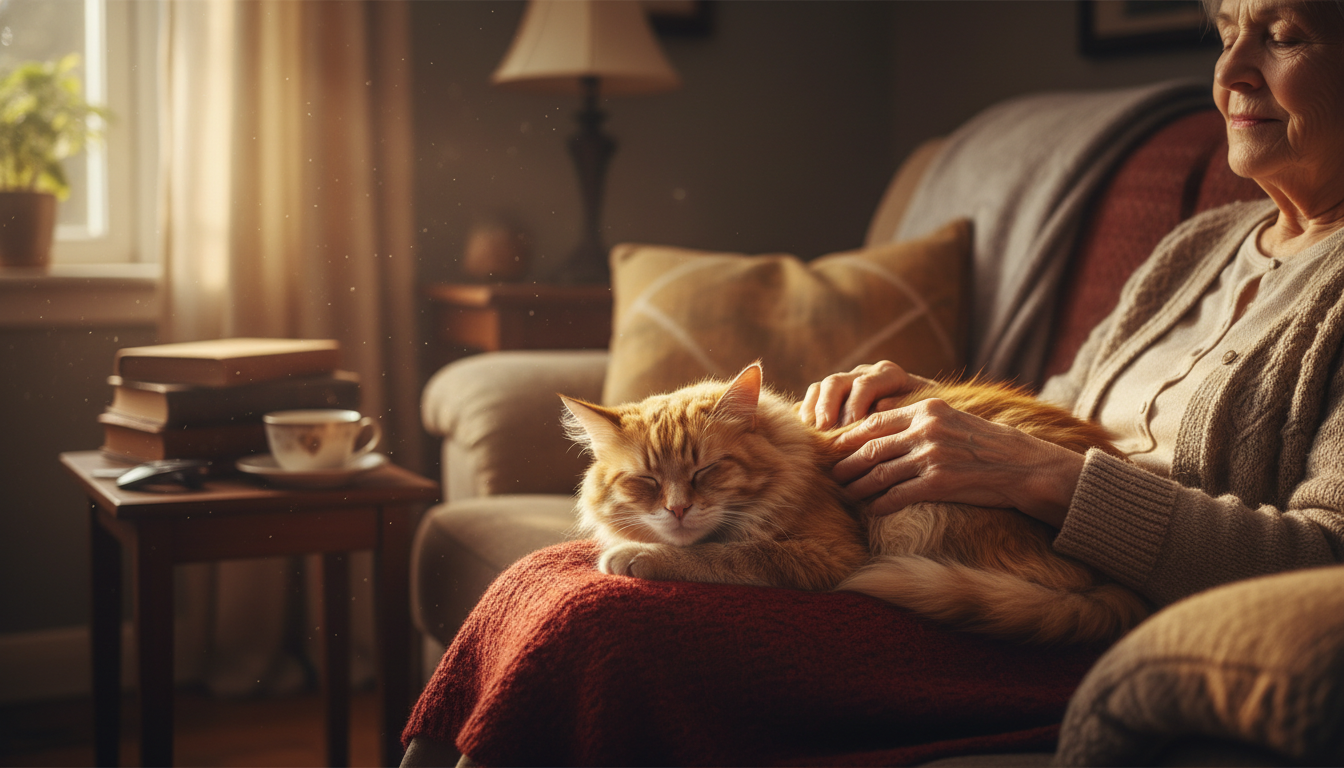
In the bustling corridors of the municipal animal shelter, amidst the cacophony of barking dogs and the high-pitched mews of newborn kittens, there was one cage that visitors consistently walked past. Inside sat Barnaby, a 15-year-old ginger tabby with clouded eyes and a coat that had lost its youthful luster. For nearly three years, Barnaby had been the shelter’s "invisible resident," a senior cat adoption candidate who seemed destined to live out his remaining days behind metal bars. But just as hope began to fade for the staff who loved him, a single moment changed the trajectory of his life forever.
The Longest Resident
Barnaby arrived at the shelter not as a stray, but as a surrender. His previous owner, an elderly gentleman, had passed away, leaving the confused and grieving feline with nowhere to go. According to shelter staff notes from his intake, Barnaby spent his first month hiding under his bedding, refusing to eat. He was mourning—a complex emotional state that animal behaviorists confirm is common in pets who lose their primary caregivers.
As the weeks turned into months, and months into years, Barnaby became a fixture of the facility. While kittens were adopted within days of becoming available, Barnaby remained. Potential adopters often cited his age, his need for a special renal diet, or simply the fact that he slept through viewing hours as reasons to move on to the next cage. He became the face of a heartbreaking statistic: older animals have the lowest adoption rates of any shelter demographic.
The Reality of Senior Cat Adoption
Barnaby’s story is not unique. According to the ASPCA, senior pets are frequently the last to be adopted and the first to be euthanized in overcrowded facilities. While puppies and kittens trigger a biological caregiving response in humans, senior pets require a different kind of adopter—someone willing to take on potential medical costs and the inevitability of a shorter time together.
Shelter volunteers noted that Barnaby was gentle but resigned. He stopped coming to the front of the cage to greet visitors, seemingly accepting his fate. "It destroys you a little bit every time someone looks at the card, sees ’15 years old,’ and immediately walks away," one volunteer shared in a shelter newsletter at the time. The staff made him as comfortable as possible, providing extra blankets and heating pads, but a shelter is no substitute for a home.
The Moment Everything Changed
It was a rainy Tuesday afternoon—typically a slow day for adoptions—when Sarah, a retired schoolteacher, walked through the doors. Unlike most visitors who made a beeline for the kitten room, Sarah asked the front desk a specific question: "Who has been here the longest?"
Staff members were reportedly stunned. They led her to the quiet corner where Barnaby’s cage was located. He was asleep, curled into a tight ball with his face hidden. Sarah didn’t ask to see him play; she didn’t ask if he was energetic. Instead, she asked the staff to open the door so she could just sit with him.
For twenty minutes, Sarah sat by the open cage, speaking softly. Slowly, Barnaby lifted his head. He stretched a stiff leg, blinked his cloudy eyes, and let out a rusty, quiet chirrup. Then, in a move that brought tears to the witnessing volunteer’s eyes, Barnaby stepped out of his cage and climbed stiffly into Sarah’s lap, burying his face in her coat.
The Bond Between Humans and Animals
The connection was instantaneous and profound. Sarah wasn’t looking for a pet to entertain her; she was looking for a soul to nurture. She later told staff that she had recently lost her own dog and the silence in her house was deafening. She didn’t want a high-energy kitten; she wanted a companion who understood the slow pace of the golden years.
The paperwork was signed in record time. As Sarah placed Barnaby into the carrier, the entire shelter staff gathered to say goodbye. It is a tradition in many shelters to announce a "long-termer" leaving the building, and that day, Barnaby received a standing ovation. After over 1,000 days of waiting, he was finally going home.
Life Beyond the Shelter Walls
The transition for a senior cat adoption can be difficult, but reports from Barnaby’s new home painted a picture of pure bliss. Social media updates shared by the shelter revealed Barnaby discovering the comfort of a king-sized bed, the warmth of a sunbeam on a living room rug, and the joy of constant companionship. Photos showed him looking distinctively different: his coat was groomed and shiny, his eyes were bright, and he was often pictured sleeping on Sarah’s chest.
Veterinary professionals emphasize that the environment plays a massive role in the health of geriatric pets. In a stress-free home environment, Barnaby’s appetite returned, and his mobility improved. The health benefits of adopting senior pets are well-documented, not just for the animals, but for the humans who adopt them, lowering blood pressure and reducing loneliness.
Why This Story Matters
Barnaby’s story went viral within the local community, prompting a surge of interest in the shelter’s other senior residents. It highlighted a crucial truth: senior animals have an immense capacity for love. They are often house-trained, calm, and deeply grateful for a second chance. They don’t need to be taught manners; they just need a place to belong.
When we choose to adopt a senior animal, we are saving a life that others have overlooked. We are telling them that they still matter, that their gray fur is a badge of honor, not a reason for rejection. Barnaby lived for two more wonderful years with Sarah before passing away peacefully—two years that made up for the three he spent waiting.
How You Can Help
If Barnaby’s story moved you, consider visiting your local shelter and asking to see the senior residents. Even if you cannot adopt, fostering a senior cat or dog can get them out of the shelter environment and make them more adoptable. Additionally, donating to medical funds helps shelters treat the age-related conditions that often deter potential adopters.
For more stories about the incredible resilience of animals, read about this rescue dog’s incredible transformation or explore how everyday people are making a difference in our community heroes section.