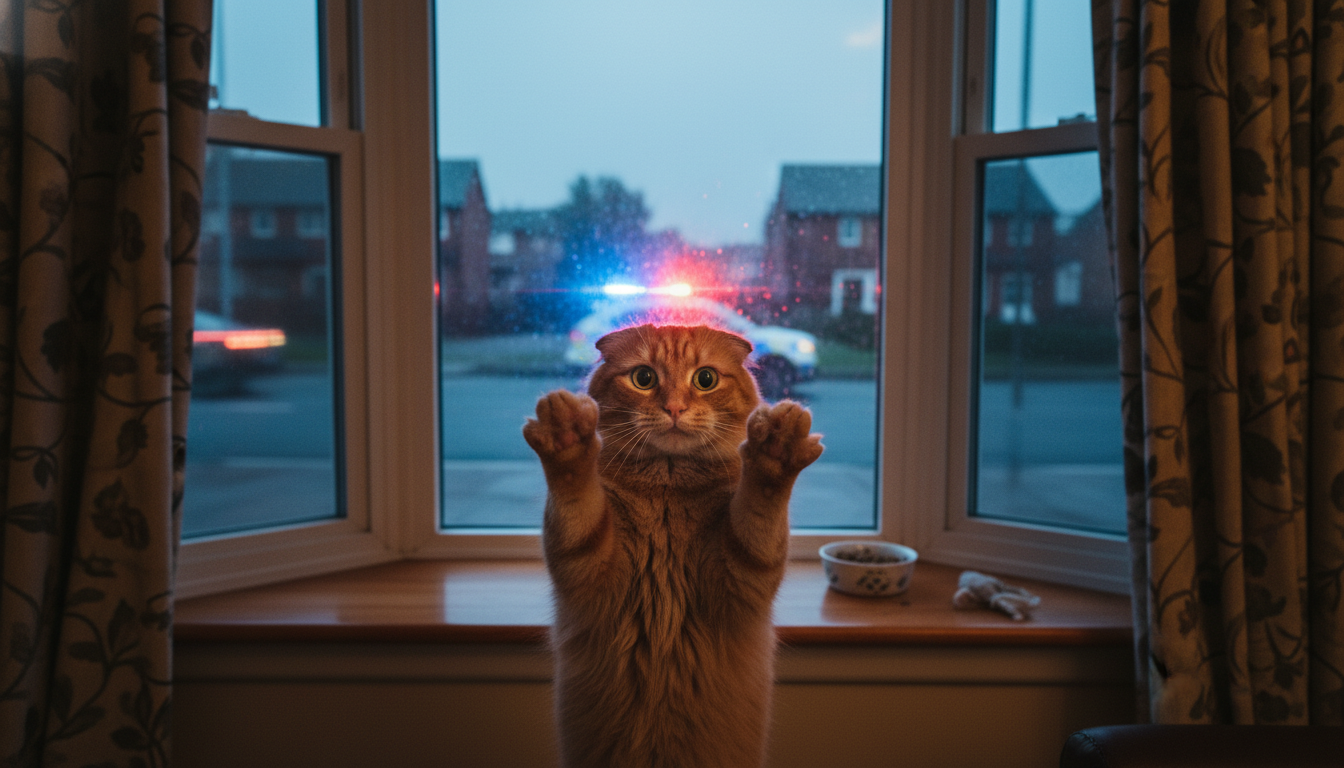
In the quiet, tree-lined neighborhoods of suburban communities, the daily routine is often the heartbeat of safety. Neighbors know when lights go on, when mail is collected, and, perhaps most tellingly, the habits of the pets in the windows next door. For residents of a small cul-de-sac in Oregon last month, it was the frantic, uncharacteristic actions of an orange tabby named Buster that signaled something was terribly wrong inside his home.
While dogs are frequently cited as the guardians of the household, barking at intruders or alerting owners to danger, cats often carry a reputation for aloofness. However, a recent incident involving local law enforcement and emergency medical services has challenged that stereotype, proving that a cat’s behavior can be just as critical in a life-or-death scenario. According to first responders on the scene, it was the animal’s persistent, directed panic that helped them understand exactly where to look and ultimately saved an elderly woman’s life.
A Break in the Routine
The incident began on a Tuesday morning, a time when 82-year-old Martha usually sat on her porch with a cup of tea. When the local mail carrier arrived at 11:00 AM, the porch was empty. This in itself wasn’t cause for alarm, but the scene at the front window was.
Buster, a six-year-old rescue cat known for sleeping in the sunbeams during the late morning, was reportedly throwing himself against the front windowpane. Witnesses stated that the cat was screeching—a sound distinct from a standard meow—and pawing frantically at the glass.
“It wasn’t normal behavior for him,” a neighbor told local reporters shortly after the event. “He usually just watches the birds. But he was looking right at me, making eye contact, and then running back into the dark house, only to return to the window seconds later. It felt like he was trying to wave us down.”
Concerned by the accumulation of uncollected mail and the animal’s distress, the neighbor called the non-emergency police line to request a welfare check. It was a decision that authorities later confirmed was the pivotal moment in the timeline of survival.
The Arrival of First Responders
When police officers arrived at the residence, the house was locked and silent, save for the muffled cries of the cat inside. According to the incident report, officers knocked repeatedly but received no response. Typically, in welfare checks where there is no obvious sign of forced entry or immediate danger, authorities must tread carefully regarding entering a private residence.
However, the officers noted the behavior of the animal inside. One officer described the scene in his report, noting that every time he shined his flashlight into the living room, the cat would run to the hallway archway, stop, look back at the officer, and let out a yowl. When the officer didn’t follow, the cat would return to the window and scratch the glass.
Recognizing that the animal appeared to be guiding them, and combined with the knowledge of the resident’s age, the decision was made to breach the door. Fire department personnel were called to assist with entry.
Reading the Signs Inside
Once inside the home, the atmosphere was tense. The house was immaculate, but the cat did not run out the open door to escape. Instead, Buster reportedly sprinted down the hallway, stopping at the entrance to the kitchen.
“The cat’s behavior was our GPS,” one of the EMTs mentioned in a statement to local news outlets. “He didn’t hide under the sofa, which is what 99% of cats do when strangers with heavy boots storm in. He stood his ground at the kitchen threshold and waited for us.”
Following the cat’s lead, responders found Martha lying on the kitchen floor. She had suffered a severe fall resulting in a hip fracture and had been unable to move or reach a phone for nearly 18 hours. She was dehydrated and in the early stages of shock, but she was alive.
During the initial medical assessment, Buster reportedly laid down next to Martha’s head, purring loudly and refusing to be moved by the paramedics until they had stabilized her on the stretcher. It was a display of loyalty that moved even the veteran first responders.
The Science of the Bond
While stories like Buster’s feel miraculous, animal behaviorists argue that they are grounded in deep social bonds. Cats are highly observant creatures that thrive on routine. When that routine is broken—such as an owner lying on the floor rather than standing—it creates anxiety in the animal.
According to the ASPCA, animals often pick up on subtle physiological changes in humans, including changes in scent caused by stress hormones or illness. While dogs are more commonly trained for these tasks, cats possess similar sensory capabilities.
“We often underestimate the depth of the attachment cats have to their guardians,” explains Dr. Sarah Henson, a veterinarian specializing in animal behavior. “They know us better than we think. When a primary caregiver is in distress, a well-socialized cat will often exhibit ‘displacement behaviors’ or agitation. In this case, the cat channeled that agitation into communication.”
For more stories on incredible animal intuition, readers can explore our coverage of a family dog who shielded a toddler during a severe storm, or the heartwarming tale of a stray cat who adopted a nursing home.
Recovery and Reunion
Martha was transported to the local hospital where she underwent successful surgery. During her recovery in a rehabilitation center, Buster was cared for by the vigilant neighbor who first called the police. The reunion, which took place two weeks later when Martha returned home with a walker, was described by friends as tearful and joyous.
The local police department shared a brief post about the incident on social media, praising the alert neighbor and the “hero cat.” The story serves as a powerful reminder to pay attention to the animals in our community. Their voices may not use words, but their actions can speak volumes.
“If that cat hadn’t made a scene in the window, nobody would have checked on her for another day or two,” the neighbor stated. “And by then, the doctors said it might have been too late. Buster didn’t just want dinner; he wanted his mom to be okay.”
In a world where we often hurry past our neighbors’ homes, this incident teaches us to pause and look closer. Sometimes, the first responder isn’t the person in the uniform—it’s the four-legged friend watching from the window, waiting for someone to notice.