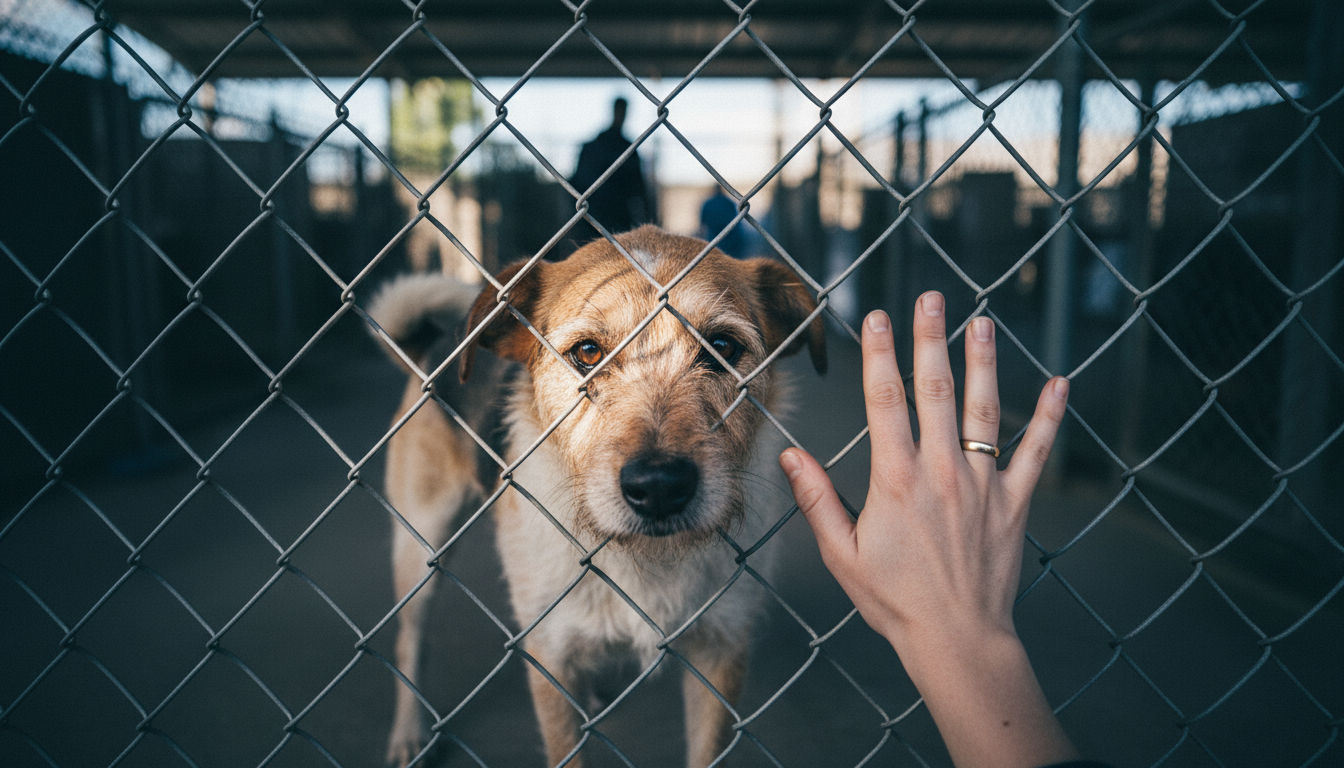
In the digital age of animal rescue, a single image can determine the difference between life and death. For a mixed-breed dog named Barnaby, his intake photo—a blurry, shadowed snapshot taken during his most terrified moment—served as an accidental warning sign to potential adopters. The image, circulated on social media and the local shelter’s website, showed what looked like a snarling, aggressive beast. But as one woman would soon discover, this dog’s adoption photo didn’t tell the whole story.
The 3-Second Judgment
Animal shelters across the country face an overwhelming challenge: how to capture the essence of a living, breathing, and often frightened soul in a single JPEG. According to data from the ASPCA, millions of companion animals enter U.S. shelters every year. With such high volume, the window to capture a potential adopter’s attention is incredibly small—often just a few seconds of scrolling on a smartphone.
Barnaby, a scruffy terrier mix estimated to be around three years old, found himself on the wrong side of this algorithm. Surrendered to a high-volume municipal shelter in Ohio, he was overwhelmed by the cacophony of barking dogs and the smell of industrial cleaner. When a staff member approached his kennel with a camera, Barnaby retreated to the back corner. As the flash went off, he let out a defensive bark, his lip curled in fear. The resulting image captured that exact millisecond: teeth bared, eyes wide and reflecting the harsh flash, posture rigid.
To the casual observer scrolling through adoption listings, Barnaby looked dangerous. Comments on the shelter’s Facebook post were sparse, and those that did appear were apprehensive. “He looks mean,” one user wrote. “I wouldn’t trust him with kids,” said another. For three weeks, Barnaby sat in his kennel, bypassed by families looking for “happier” dogs.
Looking Past the Pixelated Fear
Sarah Jenkins, a freelance graphic designer looking for a companion, admits she almost scrolled past Barnaby as well. She had been browsing various shelter sites for months, hoping to find a dog that needed a little extra patience. When she landed on Barnaby’s profile, she paused. As someone who worked with images for a living, she noticed something others hadn’t: the context of the photo.
“I looked at his eyes,” Jenkins later told shelter staff. “The teeth were scary, yes, but his eyes weren’t focused on attacking. They were wide with panic. He was pressed against the back wall. He wasn’t aggressive; he was terrified.”
Jenkins decided to visit the shelter the next day. It was a decision that would change both of their lives, illustrating the profound bond between rescue dogs and humans that often goes unnoticed behind fear-based behaviors.
The Meeting That Changed Everything
When Jenkins arrived at the facility, the volunteer on duty hesitated when she asked to see Barnaby. The dog had been labeled “fear-reactive” due to his behavior in the kennel. Kennel stress is a well-documented phenomenon in animal welfare; the Journal of Applied Animal Welfare Science has published studies indicating that the high-stress environment of a shelter can cause dogs to exhibit behaviors—such as barking, lunging, or withdrawing—that do not reflect their true personalities in a home environment.
The volunteer brought Barnaby into a quiet meet-and-greet room. Jenkins sat on the floor, turning her back to the door, and waited. She didn’t try to touch him or call him. She simply existed in the space with him.
For the first ten minutes, Barnaby paced nervously. Then, the behavior that had defined his online persona began to melt away. He sniffed Jenkins’ shoe. He let out a long, shuddering sigh—a common sign of a dog releasing tension. Slowly, he army-crawled toward her and rested his chin on her knee. There were no bared teeth. There was no growling. Just a dog desperate for safety.
The Reality of Shelter Photography
Barnaby’s story highlights a critical issue in animal rescue operations. While professional photographers often volunteer their time to help shelter animals shine, many underfunded facilities rely on overworked staff snapping quick photos with cell phones during intake—often the most stressful moment for an animal.
“Intake photos are rarely flattering,” explains Maria Gonzalez, a coordinator at a regional rescue network. “The animal has just been separated from everything they know, handled by strangers, and put in a cage. They are in fight-or-flight mode. Unfortunately, that split-second image becomes their identity to the public.”
This phenomenon can lead to longer stays for animals that are actually gentle but photograph poorly, particularly black dogs or those with cropped ears that might trigger unfair stereotypes. In Barnaby’s case, the bad lighting and timing nearly cost him a chance at a home.
From “Monster” to Cuddle Bug
Jenkins adopted Barnaby that same afternoon. The transition wasn’t instant magic; decompression takes time. For the first week, Barnaby slept in a crate with the door open, unsure if he was allowed to explore the rest of the apartment. But once he realized he was safe, the personality that the camera had missed began to shine.
Far from the snarling beast in the photo, Barnaby turned out to be a “velcro dog.” He required physical contact at all times, often sleeping with his head on Jenkins’ foot while she worked at her desk. He proved to be excellent with other dogs and surprisingly gentle with the neighborhood children, debunking the internet comments that had judged him based on a single JPEG.
To prove a point, Jenkins recreated the angle of the original shelter photo three months later. In the new version, Barnaby is lying on a rug, bathed in sunlight. His mouth is open, but in a relaxed pant—a dog smile. The difference is night and day.
Why Context Matters in Adoptions
Barnaby’s journey serves as a reminder to potential adopters to look beyond the thumbnail image. Rescue organizations urge the public to read the behavioral notes and speak to the staff who interact with the animals daily, rather than making a decision based solely on a photograph.
“We always tell people to meet the dog, not the picture,” Gonzalez adds. “A picture is a flat representation of a complex living being. You can’t see their soul in a pixel.”
For those scrolling through adoption sites today, Barnaby is proof that the diamond in the rough might just be the one hiding in the shadows of a bad photo. Sometimes, the “scariest” looking dog is just the one who needs a hug the most. If you are considering adding a pet to your family, consider reading more about how to prepare for a shelter dog to ensure a smooth transition for animals like Barnaby.
Today, Barnaby spends his weekends hiking with Jenkins and his weekdays napping on a memory foam bed. The intake photo that nearly defined his fate is now just a distant memory, a stark contrast to the happy, wagging reality of his new life.