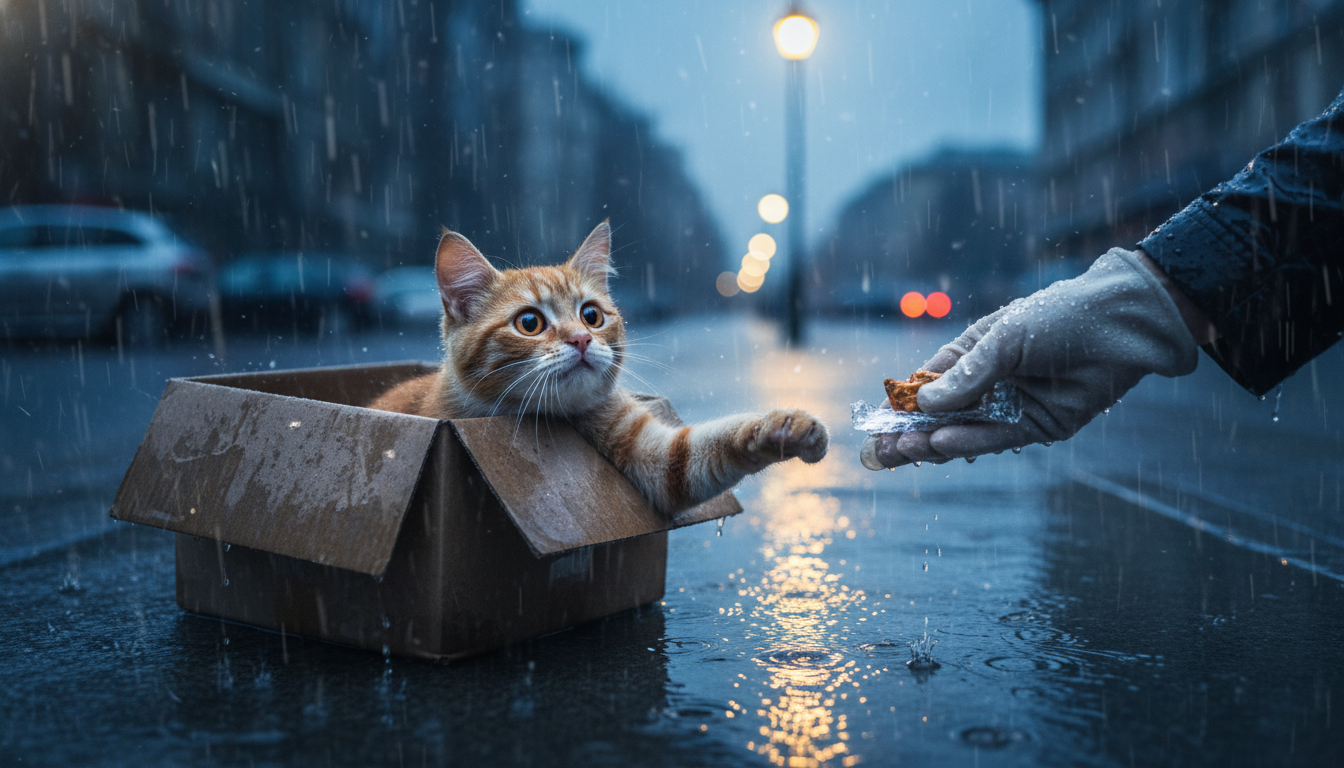
It was a Tuesday evening in late October when Sarah Jenkins, a 34-year-old nurse returning from a shift in Portland, Oregon, spotted something unusual near the dumpsters behind her apartment complex. Amidst the drizzling rain and the ambient noise of the city, a soggy cardboard box sat precariously on the curb. Written on the side in fading marker were the words “Free Cat.”
Animal abandonment is a tragic reality that shelters face daily, and usually, a cat found in a box under such circumstances is terrified, defensive, and deeply traumatized. When Sarah approached the box, she braced herself for hissing, scratching, or a fearful retreat into the shadows. She pulled out her phone flashlight, ready to call animal control if the situation was volatile.
However, what happened next defied every expectation of animal behaviorists and shelter volunteers alike. The reaction of the ginger tabby inside didn’t just surprise Sarah; it eventually captured the hearts of thousands on social media and highlighted the incredible resilience of animals.
The Moment of Discovery
According to Sarah’s account shared with the Oregon Humane Society, she slowly lifted the soggy flaps of the cardboard box. Inside curled a malnourished orange tabby, soaking wet and shivering. Instead of arching his back or bearing his teeth, the cat looked up at Sarah with heavy, tired eyes and let out a soft, guttural chirrup.
“I reached my hand out slowly, expecting a swipe,” Sarah told local reporters. “Instead, he immediately pressed his head into my palm and started purring. It was the loudest motor I’ve ever heard coming from such a small, frail body.”
This immediate display of trust is rare. Veterinary behaviorists note that animals in high-stress environments usually enter a “fight or flight” mode. For this cat found in a box to choose affection over defense suggested a personality of immense gentleness, despite the betrayal he had clearly suffered.
Assessment at the Shelter
Sarah scooped the cat up, wrapping him in her scrub jacket, and rushed him to the nearest 24-hour emergency vet, who works in tandem with local rescue groups. The veterinary staff, accustomed to handling feral or terrified strays, were equally stunned by the cat’s demeanor.
Dr. Emily Chen, the attending veterinarian, reported that the cat—whom the staff named “Barnaby”—was severely underweight, dehydrated, and suffering from a mild upper respiratory infection. “Usually, when we treat a cat in this condition, we have to sedate them or use thick gloves,” Dr. Chen explained. “Barnaby just made biscuits on the exam table while we drew blood. He seemed incredibly relieved just to be touched.”
The medical report indicated that Barnaby was likely a house cat who had been neglected for some time before being abandoned. His trusting nature suggested he had once known love, making his abandonment in a sealed box all the more heartbreaking.
The Psychology of Resilience
Barnaby’s story raises important questions about animal psychology. Why do some animals shut down while others remain open to human connection? According to the ASPCA, a cat’s socialization period in kittenhood plays a massive role in their future interactions with humans. However, individual temperament is also a factor.
Staff at the shelter noted that Barnaby’s behavior served as a coping mechanism. By soliciting affection, he was securing safety. This “friendliness as a survival strategy” is seen in many rescue animals, but rarely to the degree Barnaby displayed immediately after being discarded in the rain.
A Community Rallies
News of the cat found in a box who refused to stop purring spread quickly through the local animal rescue community. The shelter posted a video of Barnaby kneading his blankets while hooked up to IV fluids, and applications to foster him flooded in.
“It reminds people that resilience is possible,” said Mark Higgins, a volunteer coordinator at the shelter. “People see this cat who has every right to be angry, and instead, he is just asking for love. It resonates deeply with anyone who has gone through hard times.”
If you are interested in reading more about how animals recover from trauma, check out our coverage on senior dog transformations and the incredible stories of stray cat miracles.
Finding a Forever Home
After two weeks of medical treatment and a high-calorie diet, Barnaby was cleared for adoption. The shelter was careful to select a home that understood his medical history and his need for constant companionship. Surprisingly, they didn’t choose a quiet home with no other pets; they chose a bustling family with a Golden Retriever.
During the meet-and-greet, Barnaby walked right up to the family’s dog and rubbed against his legs, proving once again that his capacity for love was indiscriminate and boundless. Today, Barnaby is fully recovered, weighing a healthy 12 pounds, and spends his days sleeping in sunbeams—far away from the cold, wet box where he was found.
Why This Story Matters
The image of a cat found in a box is often a symbol of human cruelty. However, Barnaby turned it into a symbol of hope. His refusal to let his circumstances dictate his personality serves as a powerful lesson in forgiveness and resilience.
Rescuers emphasize that if you can no longer care for a pet, abandoning them is never the answer. Surrendering an animal to a shelter, rescue group, or veterinary clinic ensures they have a fighting chance at a second life—a chance that Barnaby was lucky to get, thanks to a stranger who stopped to look inside a box.