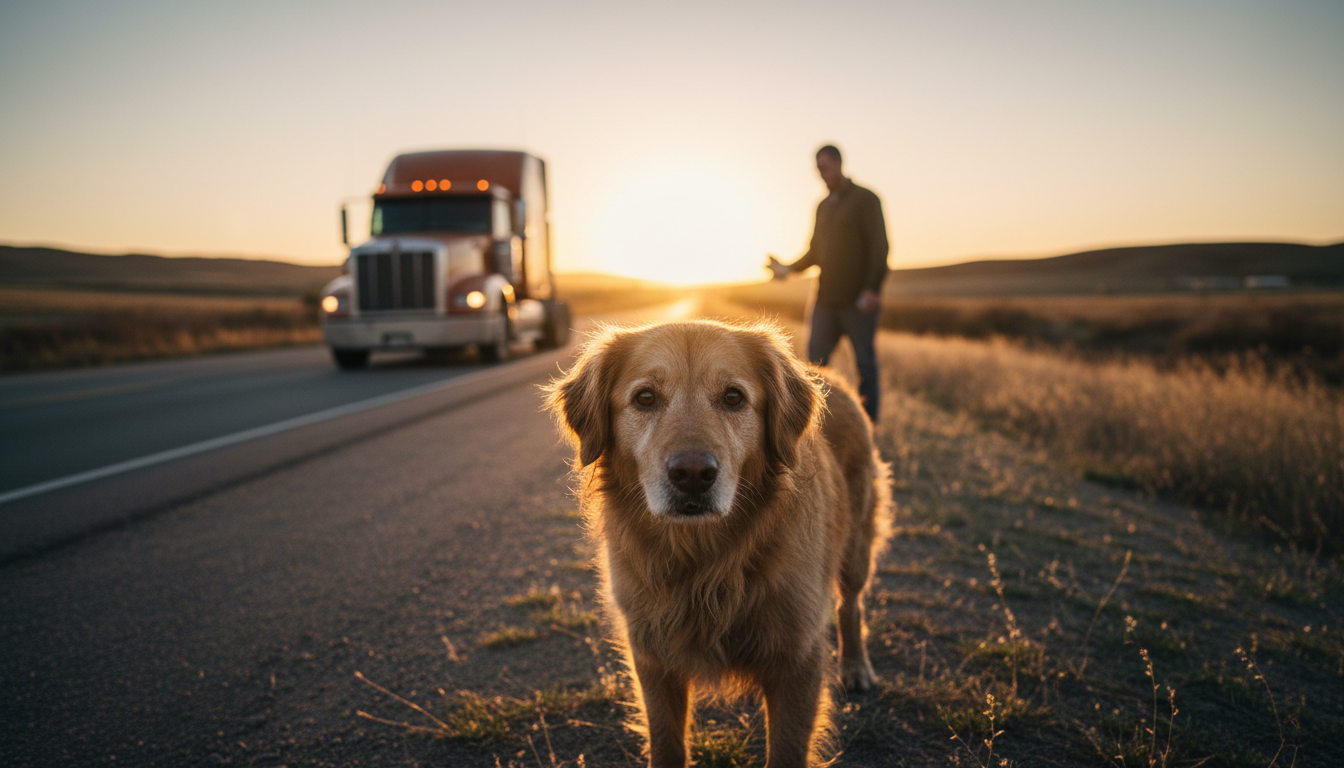
The silence in the Miller household was the loudest thing anyone had ever heard. For seven years, the rhythmic clicking of claws on hardwood floors and the soft jingle of a collar had been the background noise of their lives. But after Cooper, a seven-year-old Golden Retriever mix, vanished into the thick woods behind their rural property during a sudden severe thunderstorm, that silence became a heavy, suffocating presence.
It is a nightmare scenario that affects millions of pet owners globally. According to the American Humane Association, approximately 10 million dogs and cats are lost or stolen in the United States every single year. For the Millers, the statistics became a stark reality on a Tuesday evening in late October. But what makes Cooper’s story extraordinary isn’t just that he went missing; it is the miraculous nature of his return long after the trail had gone cold and the search parties had disbanded. This missing dog returned against all odds, reminding us of the resilience of the animal spirit and the unbreakable bond between humans and their canine companions.
The Night Everything Changed
According to reports from the local animal control office that initially handled the case, the storm that hit the county that night was unseasonal and violent. Cooper, usually calm, had been spooked by a thunderclap that shook the house foundation. In a moment of panic, he bolted through a screen door that hadn’t been fully latched.
“We were out there within minutes,” Sarah Miller told local reporters in a retrospective interview. “We had flashlights, we were calling his name, but the rain was so heavy it drowned out everything. By morning, he was just gone.”
The initial search was exhaustive. The community rallied around the family, a testament to how communities often come together in times of crisis. Neighbors scoured the woods, flyers were stapled to every telephone pole within a ten-mile radius, and social media posts were shared thousands of times. Yet, as days turned into weeks, the sightings stopped. The phone calls ceased. The weather turned colder, and the reality of survival in the wild for a domesticated dog began to dim the family’s hope.
When the Search Goes Cold
Experts in animal behavior note that the first 24 to 48 hours are critical when a pet goes missing. As time passes, animals often enter a “survival mode,” becoming skittish and avoiding human contact, even with people they know. This makes recovery increasingly difficult as the weeks go by.
By the three-month mark, the Millers had to face the heartbreaking possibility that Cooper was gone for good. They kept the flyers up, but the active searches on weekends had stopped. They began the slow, painful process of grieving a family member they never got to say goodbye to. The dog bed in the corner of the living room remained empty, a painful monument to their loss.
However, stories of animals traversing vast distances or surviving on their own for extended periods are not unheard of. It requires a combination of instinct, luck, and the kindness of strangers—elements that would eventually align for Cooper.
The Miracle Miles Away
Six months after Cooper disappeared, a truck driver named distinctive only as “Big Jim” pulled into a rest stop nearly 400 miles away from the Miller’s home. He noticed a scruffy, emaciated dog scavenging near the dumpsters. The dog was wary, limping on his back leg, and covered in burrs and mud.
“He looked like he had been through the wars,” the driver later recounted to shelter staff. “But there was something in his eyes. He didn’t run away when I offered him part of my sandwich. He just looked tired.”
The driver managed to coax the dog into his cab and drove him to the nearest animal shelter in the next county. Veterinary staff at the shelter immediately assessed the dog. He was severely malnourished, dehydrated, and suffering from a minor infection in his paw, but he was alive.
The Power of a Microchip
This is where the story pivots from a tragedy to a miracle. The standard procedure for any intake at an animal shelter is a scan for a microchip. According to the American Veterinary Medical Association (AVMA), dogs with microchips are more than twice as likely to be returned to their owners than those without.
The scanner beeped. A number appeared.
When the shelter staff called the number registered to the chip, Sarah Miller initially didn’t answer. It was an unknown number from a different state. When she finally listened to the voicemail, she collapsed to the floor. The description matched: the white patch on the chest, the floppy left ear, and the gentle demeanor. It was Cooper.
“I thought it was a prank at first,” Sarah said. “How could he be 400 miles away? How did he survive the winter?”
The Science of the Journey
Veterinarians and animal behaviorists have long debated how lost dogs manage to survive and travel such distances. While some attribute it to a supernatural “homing instinct,” the reality is often a mix of scavenging and displacement. It is likely Cooper was picked up by someone else earlier in his journey, perhaps transported part of the way, or he simply kept moving in search of food and warmth.
Dr. Emily Vance, a veterinarian who treated Cooper upon his return, noted that his survival was a testament to his physical resilience. “He had lost nearly 25% of his body weight,” she explained. “But his organs were functioning well. He is a fighter.”
The Reunion
The reunion, captured on a shaky cell phone video by shelter staff, was nothing short of emotional dynamite. The Millers drove through the night to reach the shelter. When they walked into the visitation room, Cooper, who had been lying lethargically in a kennel, lifted his head.
He sniffed the air. His ears perked up. Then, a low whine escaped his throat. When he saw Sarah, the transformation was instant. Despite his weak legs, he scrambled to get to her, his tail wagging with a vigor that defied his physical condition. It was a scene of pure, unadulterated joy—a tear-jerking reunion that left not a dry eye among the shelter staff.
“He just buried his head in my lap and let out this big sigh,” Sarah recalled. “It was like he was finally letting go of the fear he’d been holding onto for six months.”
Recovery and Reflection
Cooper’s return to health was slow but steady. It took weeks of small, frequent meals to restore his weight and multiple baths to remove the grime of his travels. But mentally, he was home the moment he stepped back through the front door.
The Millers have since become vocal advocates for microchipping and GPS collars. They know how close they came to never seeing Cooper again. His story serves as a powerful beacon of hope for anyone currently searching for a lost pet. It is a reminder that even when the flyers fade and the phone stops ringing, the story isn’t necessarily over.
Sometimes, against all odds and logic, a missing dog returned to the place he belonged proves that hope is never truly wasted. Cooper found his way back after everyone stopped looking, proving that love often leaves a trail that can never fully be washed away.