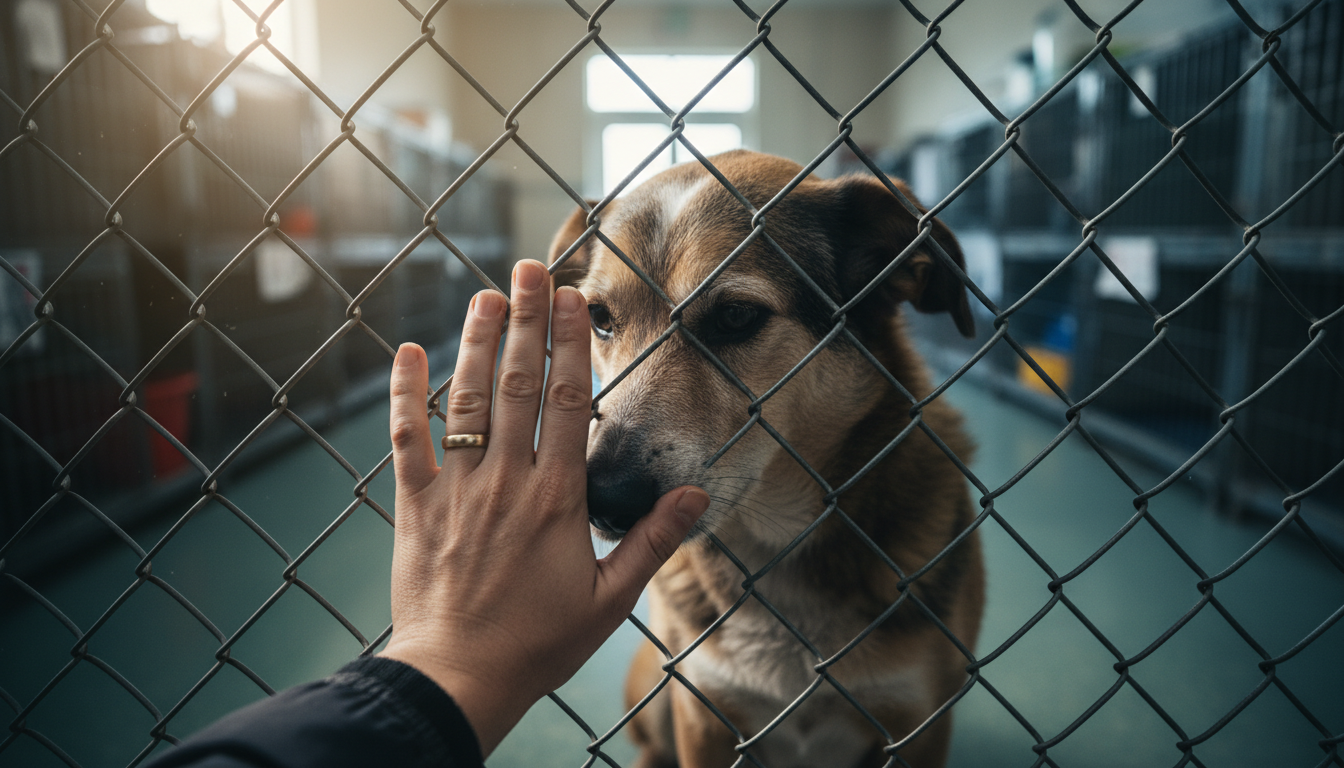
In the high-volume world of animal rescue, time is usually measured in days or weeks. A puppy might stay for three days; an adult mixed breed might wait three weeks. But for a dog named Rusty, time began to blur into something much more permanent. As the seasons changed outside the concrete walls of the municipal shelter, Rusty remained, watching thousands of other dogs walk out the front door while he stayed behind.
It is a phenomenon known in the animal welfare industry as “kennel stress” or shelter deterioration, but to the volunteers who loved him, it was simply a heartbreak in slow motion. Rusty had become what shelter staff call a “long-timer”—a dog waiting in a shelter far longer than anyone realized or intended.
The Invisible Dog in Run 42
Rusty arrived at the shelter as a stray, frightened and confused, with no collar and no microchip. According to intake records, he was estimated to be about five years old—a difficult age in the adoption world. He wasn’t a cute, boundless puppy, nor was he a frail senior eliciting immediate sympathy. He was a sturdy, middle-aged mixed breed with a greying muzzle, the kind of dog that comprises the majority of shelter populations across the United States.
For the first month, staff were optimistic. He knew basic commands and walked well on a leash. But as the weeks turned into months, Rusty began to suffer from the invisibility that plagues so many dogs of his demographic. Prospective adopters would walk past Run 42, glancing briefly at the brown and black dog resting on his cot, and keep moving toward the puppies in the front ward.
According to the ASPCA, approximately 3.1 million dogs enter U.S. animal shelters nationwide every year. With such high volume, the competition for attention is fierce. Dogs that do not bark for attention or jump at the gate often get overlooked, fading into the background noise of the kennel environment.
“It happens more often than people think,” said Sarah Jenkins, a senior volunteer coordinator who worked closely with Rusty. “The dog isn’t doing anything wrong. They just aren’t demanding attention. Rusty was a gentleman. He would sit and wait, but in a loud shelter, the quiet ones are often the last to leave.”
The Toll of 500 Days
By the time Rusty hit the one-year mark—365 days in a kennel—the stress was becoming visible. Long-term confinement can have devastating effects on a dog’s mental health. The emotional toll on rescue animals is profound; they often develop reactive behaviors, spinning in their kennels or barking incessantly out of frustration.
Rusty, however, went the other way. He shut down. Staff noticed he was sleeping more, eating less, and his tail wagged less enthusiastically when volunteers arrived for morning walks. He was becoming depressed.
The shelter staff refused to give up on him. They moved him to an office occasionally to give him a break from the noise. They engaged in “enrichment” activities—puzzle toys, scent work, and playgroups—to keep his mind sharp. But they knew that what he really needed was a home.
The Social Media Hail Mary
Realizing that foot traffic alone wouldn’t save Rusty, the shelter’s communications team decided to launch a targeted campaign. They stopped posting just his photo and started telling his story. They counted the days.
“Day 450: Rusty is still here.”
“Day 480: Rusty is dreaming of a couch.”
The posts were raw and honest, highlighting the reality of a dog waiting in a shelter for nearly a year and a half. The community began to rally. Shares on Facebook and Instagram skyrocketed. People who couldn’t adopt started pledging money to cover his adoption fees and provide a year’s supply of food for whoever took him home.
It highlights a growing trend in animal welfare: the power of digital storytelling. According to the Humane Society of the United States, social media has become a primary driver for adopting “hard-to-place” animals, including seniors and long-stay residents.
The Moment Everything Changed
On Day 512, a couple walked into the shelter. They hadn’t come to browse; they had come specifically for Rusty. They had seen the post about his 500th day and couldn’t get his sad eyes out of their minds.
The meeting was tense for the staff—they wanted it to work so badly that they held their breath. Rusty was brought out into the play yard. He hesitated at the door, blinking in the sunlight. The man knelt down, ignoring the dirt on the ground, and extended a hand. Rusty sniffed, exhaled a long breath, and leaned his entire body weight against the man’s leg.
“He chose them,” Jenkins recalled, tearing up. “It was immediate. He knew.”
The Freedom Walk
The day Rusty left was a celebration. In shelter culture, when a long-timer finally leaves, it is customary for staff and volunteers to line the hallway for a “Freedom Walk.” As Rusty walked down the corridor on a leash, not toward a kennel but toward the exit, the people who had fed him, cleaned him, and loved him for over 500 days cheered, clapped, and wept.
He didn’t look back. He hopped into the backseat of a sedan, settled onto a thick blanket, and fell asleep before the car even left the parking lot.
Life on the Other Side
Today, Rusty—now renamed “Barnaby” to signify his new life—is unrecognizable from the depressed dog in Run 42. His owners report that he sleeps in the bed (often hogging the covers) and has discovered a love for hiking.
His story serves as a powerful reminder of the gems hidden in shelter runs. While puppies attract the crowds, it is often the adult dogs, the quiet observers, and the long-waiters who have the most love to give. They seem to understand the second chance they have been given.
For those considering adding a pet to their family, the plea from rescue workers is consistent: ask to see the dog who has been there the longest. Ask for the dog waiting in the shelter who is overlooked. As Barnaby proved, they aren’t broken; they are just waiting for the right person to notice them.
If you were moved by Barnaby’s journey, read more about extraordinary rescue transformations and learn how you can help local shelters today.