The call came in late on a rainy Tuesday, a time when the staff at the municipal animal control center usually hopes for a quiet shift. A landlord, inspecting a property recently vacated following a court-ordered eviction, had found a taped-up cardboard box in the center of an empty living room. Inside was a three-year-old Calico cat, silent and trembling, alongside a half-eaten bag of dry food. This scenario—a cat left behind after eviction—has become a heartbreakingly common narrative in animal rescue circles, reflecting a growing housing crisis that impacts not just humans, but their silent companions as well.
For Sarah, a dedicated volunteer who had spent five years walking dogs and cleaning litter boxes at the local shelter, this specific intake was almost the breaking point. Suffering from severe compassion fatigue, Sarah had walked into the shelter that morning with a letter of resignation drafted in her pocket. She was tired of the endless stream of abandoned animals and the emotional toll of seeing pets discarded like furniture. But then she met Cleo, the cat from the empty apartment, and everything changed.
The Silent Victim of a Housing Crisis
When Cleo arrived at the intake bay, she wasn’t aggressive, nor was she injured. She was completely shut down. According to veterinary behaviorists, this state of freezing is a common trauma response in felines who have been suddenly uprooted from their territories and separated from their bonded humans. The shelter staff noted on her chart: "Owner Evicted/Abandonment."
Sarah was assigned to the isolation ward that evening. She watched as the staff transferred the terrified cat into a stainless-steel kennel. Cleo pressed herself into the furthest corner, burying her face in a towel to hide from the harsh fluorescent lights and the barking of dogs in the adjacent wing.
"I looked at her, and I saw exactly how I felt," Sarah later told shelter coordinators. "She was completely overwhelmed and hopeless. Seeing a cat left behind after eviction like that, treated as an afterthought, usually makes me angry. But this time, it just broke my heart."
The Reality of Compassion Fatigue
Animal rescue is physically demanding, but the emotional labor is often what drives volunteers away. According to the Humane Society of the United States, compassion fatigue is a prevalent issue among animal welfare workers, characterized by physical and emotional exhaustion leading to a diminished ability to empathize or feel compassion for others. Sarah was a textbook case. She had seen one too many senior dogs surrendered and one too many litters of kittens found in dumpsters.
However, the resignation letter stayed in her pocket that night. Instead, Sarah pulled up a plastic stool and sat outside Cleo’s kennel. She didn’t try to touch the cat or coax her out with treats. She simply sat there, reading a book aloud in a soft, rhythmic voice, providing a consistent presence in a terrifying new world.
A Slow Journey to Trust
For the next two weeks, the routine was the same. The cat left behind after eviction refused to eat when staff were watching. She would only use her litter box in the dead of night. Sarah, however, made Cleo her project. She began coming in on her days off, specifically to sit with the Calico.
It is well-documented in animal psychology that consistent, non-threatening human presence can help lower cortisol levels in shelter animals. By day five, Cleo blinked slowly at Sarah—a universal cat signal of trust. By day eight, she ate a spoonful of wet food from Sarah’s finger.
"It wasn’t a miracle cure," the shelter manager explained in an interview about the volunteer program. "It was patience. Sarah didn’t ask anything of Cleo. She just offered space. And in return, seeing Cleo respond gave Sarah a sense of purpose that she had lost."
The Turning Point
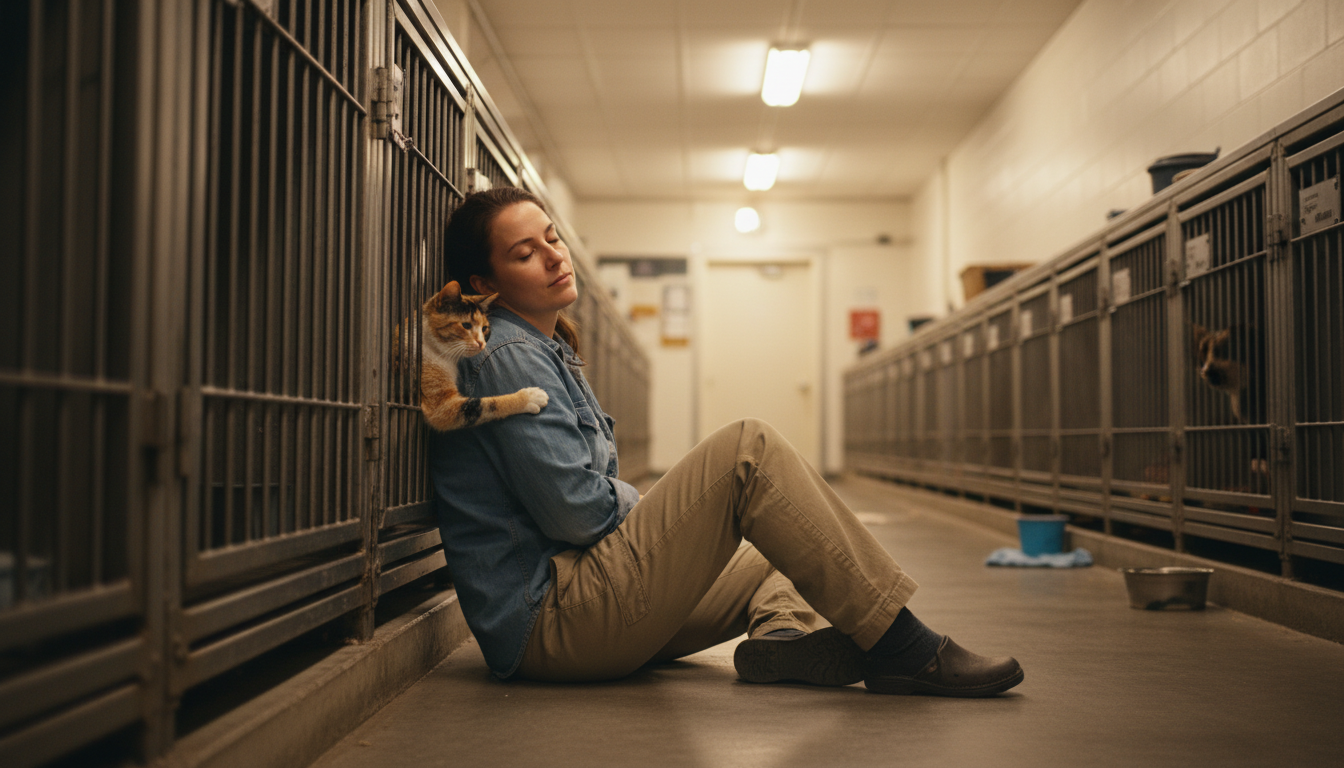
The breakthrough happened on a Thursday evening. Sarah was sitting by the kennel, exhausted from her day job, resting her forehead against the metal bars. She felt a soft weight press against the mesh. Cleo had moved from the back of the cage and was rubbing her cheek against Sarah’s hand through the wires, purring like a small engine.
In that moment, the narrative shifted. It wasn’t just about saving a cat left behind after eviction; it was about the mutual healing that occurs between humans and animals. Sarah realized that if Cleo—who had lost her home, her family, and her security—could find the courage to trust again, then Sarah could find the strength to keep showing up.
The Impact on Adoption and Advocacy
Cleo’s story began to circulate on the shelter’s social media pages, written by Sarah herself. She used the platform not just to advertise a cat for adoption, but to educate the public on the realities of the housing market’s impact on pets. She advocated for better resources for pet owners facing eviction and shared tips on temporary foster programs that can prevent permanent surrender.
The post went viral locally. It highlighted a crucial aspect of animal welfare: behind every stray is a story, and often, a tragedy involving humans who had no other choice. The shelter received dozens of inquiries, not just for Cleo, but regarding how to help families in crisis keep their pets.
A New Beginning for Both
Three weeks after being found in that empty apartment, Cleo was adopted by a retired librarian who promised a quiet home full of sunbeams and patience. Sarah was there to say goodbye. She placed Cleo in the carrier, whispered a promise to her, and watched her walk out the door to a new life.
Sarah then walked to the volunteer coordinator’s office. She took the crumpled resignation letter out of her pocket and threw it in the recycling bin. She signed up for the next month’s shifts, specifically requesting to mentor new volunteers on handling shut-down animals.
The story of the cat left behind after eviction didn’t just end with an adoption; it revitalized a critical member of the shelter’s team. It served as a powerful reminder that while we cannot save every animal from the heartache of abandonment, the act of trying saves us, too. In the world of animal rescue, hope is a renewable resource, often replenished by the very creatures we aim to save.
For more stories on how animals change human lives, read about the dog who saved a veteran from PTSD or explore our guide on how to volunteer effectively at your local shelter.