In the quiet, dusty corner of an empty apartment, a small orange tabby sat waiting near the door. The furniture was gone, the boxes were packed, and the people he had known for his entire life had walked out, locking the door behind them. He didn’t know it yet, but he had become a statistic—another cat left behind after eviction in a housing crisis that has overwhelmed animal shelters across the country.
For Elena, a volunteer at the City Municipal Shelter, the arrival of this cat—later named Barnaby—came at a breaking point. After three years of witnessing the endless stream of surrendered pets, compassion fatigue had set in. She was tired, heartbroken, and ready to hand in her badge. But the story of Barnaby, the confused senior cat left alone in an empty apartment, would become the anchor that kept her from drifting away.
The Reality of Pets Left Behind
The call came in on a Tuesday morning. A landlord, inspecting a property after an eviction, found Barnaby huddled in a closet. According to Animal Control officers who responded to the scene, there was a small bowl of dry food left in the kitchen, but no water. The cat was dehydrated, matted, and terrified.
This scenario is becoming increasingly common. According to data from the Humane Society of the United States, housing insecurity is a leading cause of pet surrender. When families are forced out of their homes rapidly, pets often become the silent victims of financial instability. Shelter staff noted that Barnaby wasn’t a stray; he was clearly a house cat who had simply been abandoned when his family’s world collapsed.
“He was completely shut down,” reported the intake coordinator at the shelter. “He wouldn’t eat, he wouldn’t look at us, and he pressed himself so hard into the back of his kennel that he was practically shaking.”
A Volunteer on the Brink
Elena had seen it all before. Over the past few months, the emotional weight of rescue work had taken its toll. She described feeling a sense of numbness—a classic symptom of the emotional toll of animal rescue. “You see so much heartbreak that eventually, you start to feel like you aren’t making a difference,” Elena shared in a later interview with shelter staff. “I had drafted my resignation email. I was going to send it that Friday.”
Then she saw Barnaby. His intake card read: “Found in vacated apartment. Owner unknown. Senior.” Something about the resignation in his eyes mirrored her own feelings. He wasn’t hissing or fighting; he had simply given up. For reasons she couldn’t explain, Elena decided she would make Barnaby her final project before quitting.
Building Trust One Blink at a Time
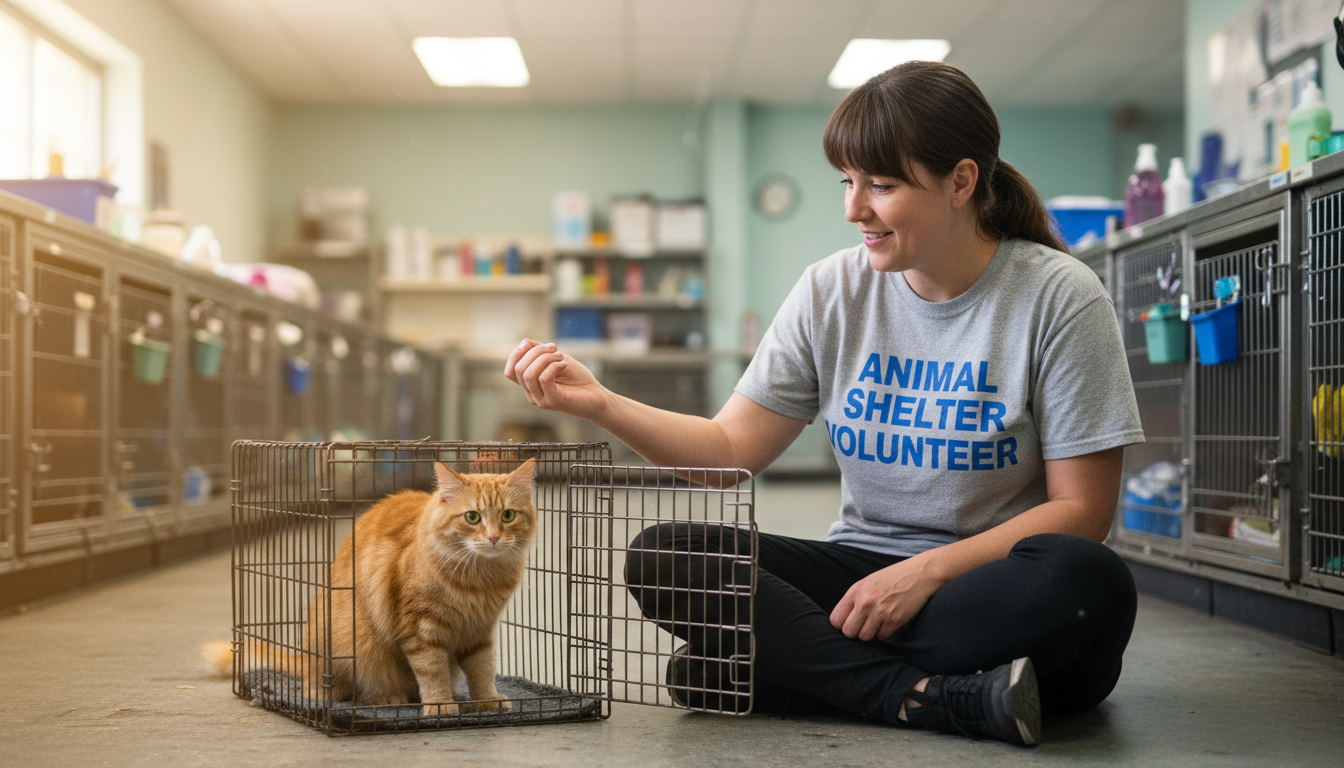
The rehabilitation of a cat left behind after eviction is rarely immediate. These animals often suffer from acute stress and depression. For the first three days, Barnaby refused to acknowledge Elena. He sat facing the wall, ignoring the treats and soft whispers she offered.
Veterinary behaviorists emphasize that patience is key in these situations. Elena spent her shifts simply sitting by his cage, reading a book aloud so he could get used to the rhythm of a calm human voice. It was a slow, meditative process that forced Elena to slow down as well.
“I realized that in my rush to save everyone, I had stopped connecting with the individuals,” she noted. By focusing solely on Barnaby, the overwhelming noise of the shelter faded into the background.
The breakthrough happened on day five. As Elena finished reading a chapter, she looked at Barnaby and performed a “slow blink”—a feline gesture of trust. To her shock, Barnaby turned his head and slowly blinked back. It was a small gesture, but in the world of animal rescue, it was a monumental victory.
The Healing Process
Once the barrier was broken, Barnaby’s personality began to emerge. He wasn’t just a sad, abandoned senior; he was a vocal, affectionate cat who loved chin scratches and had a peculiar habit of “making biscuits” on his water bowl.
As Barnaby began to heal, so did Elena. The simple act of earning this cat’s trust reminded her why she had started volunteering in the first place. It wasn’t about fixing the entire world or saving every single animal—it was about changing the reality for the one creature in front of her.
Shelter staff observed a visible change in Elena’s demeanor. She was no longer rushing through tasks with a heavy heart. She was engaged, advocating for Barnaby, and even taking photos to help build his adoption profile. She wrote a bio for him that highlighted his resilience, focusing on the unique benefits of adopting a senior cat.
A New Beginning for Barnaby
Two weeks after his arrival, Barnaby’s story caught the eye of a retired couple looking for a calm companion. They weren’t deterred by his age or the trauma of his past. They saw the soul that Elena had worked so hard to draw out.
According to the adoption counselors, the meeting was instant love. Barnaby, the cat who had once pressed himself against the back of a cage in terror, walked right up to the husband and rubbed his cheek against the man’s hand. He was ready to go home.
Watching Barnaby leave in a carrier, this time headed toward a forever home rather than an uncertain fate, Elena deleted the resignation email she had saved in her drafts.
Why This Story Matters
Barnaby’s journey highlights a critical issue in animal welfare: the intersection of housing crises and animal abandonment. While the humans involved in the eviction likely faced their own tragedies, the cat left behind after eviction is a reminder of the innocent lives caught in the crossfire.
However, the story is also a testament to the resilience of both animals and the people who care for them. For Elena, Barnaby was a mirror. By saving him, she managed to save her own sense of purpose.
“He taught me that it’s okay to be broken for a little while,” Elena told shelter coordinators. “But you don’t have to stay that way. If he could trust again after everything he lost, I could find the strength to keep showing up.”
Today, Elena continues to volunteer at the City Municipal Shelter, now serving as a mentor for new volunteers dealing with compassion fatigue. As for Barnaby, updates from his new family show him sleeping in sunbeams on a comfortable quilt—far away from the empty apartment where his life almost ended.