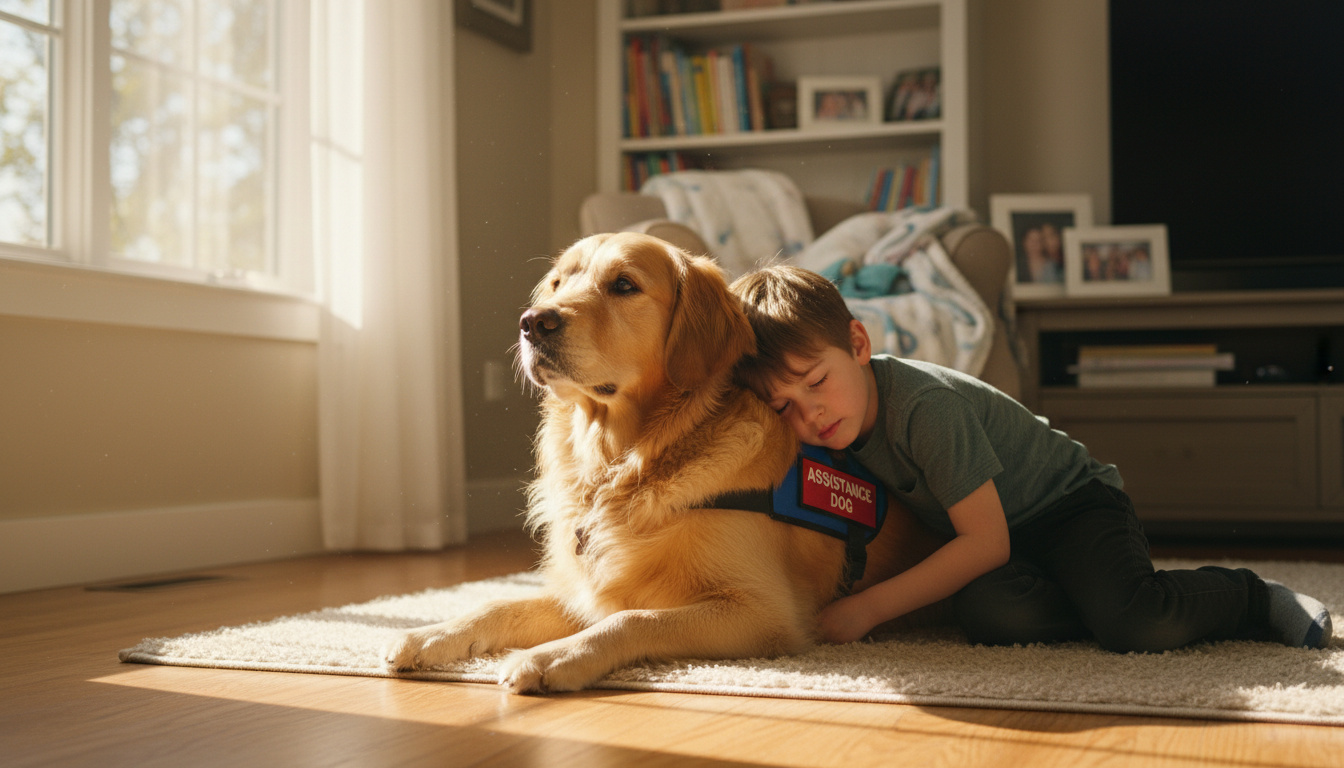
When the diagnosis is severe, and the prognosis is grim, families often find themselves clinging to every shred of hope, even when the medical community urges caution. For the Miller family, that hope came not in the form of a new pharmaceutical trial or a surgical breakthrough, but on four paws. Their journey with a Golden Retriever named Barney serves as a powerful testament to the unexplained, intuitive bond between humans and animals—a bond that even seasoned doctors eventually had to acknowledge changed a life in ways science couldn’t predict.
A Diagnosis That Stopped Time
The story begins in a quiet suburb, in a home dominated by silence and vigilance. Ethan, then just five years old, was diagnosed with a particularly aggressive form of drug-resistant epilepsy. According to his parents, the seizures were frequent, violent, and struck without warning. The family lived in a perpetual state of high alert. Sleep was a luxury they couldn’t afford; a seizure in the middle of the night could be fatal.
“We were told to manage our expectations,” Ethan’s mother shared in reports regarding their early struggles. “The doctors were incredible, but they were also realistic. They told us that Ethan’s condition would likely limit his independence forever. They didn’t expect him to play sports, go to regular school, or sleep alone.”
The medical team had exhausted the standard list of anticonvulsant medications. While they managed to reduce the severity of some episodes, the unpredictability remained. The fear of SUDEP (Sudden Unexpected Death in Epilepsy) hung over the household like a dark cloud.
The Search for a Different Kind of Help
Desperate for a solution that didn’t involve more sedation, the family began researching medical assistance dogs. At the time, the concept of a “seizure alert dog” was—and to some extent remains—a topic of debate within the medical community. While organizations like the Epilepsy Foundation acknowledge the value of seizure response dogs (dogs that bark or activate alarms during a seizure), the idea that a dog could predict a seizure before it happened was often viewed with skepticism by neurologists.
“Our neurologist was hesitant,” the family noted. “He said there was no scientific evidence that a dog could smell or sense a seizure coming. He didn’t want us to get our hopes up or spend thousands of dollars on a placebo effect.”
Despite the medical skepticism, the family pressed on. They connected with a specialized trainer who introduced them to Barney, a two-year-old Golden Retriever with a calm demeanor and intense focus. Barney wasn’t just a pet; he was a medical device wrapped in golden fur. But he was about to prove he was much more than that.
The Bond That Defied Medical Logic
The introduction of a service dog into a home is a rigorous process. For weeks, the focus was on bonding. Barney slept in Ethan’s room, walked with him, and learned the scent of the boy’s chemistry. The initial goal was simple: if Ethan had a seizure, Barney was trained to bark loudly to alert the parents and then lie next to Ethan to prevent injury.
However, three months into their partnership, something strange happened. One Tuesday afternoon, while Ethan was watching cartoons, Barney began to act erratically. He whined, paced, and nudged Ethan’s hand relentlessly. He wasn’t barking an alarm; he was seeking attention with an urgency the family hadn’t seen before.
Thinking the dog needed to go outside, Ethan’s mother tried to lead him to the door. Barney refused. He planted his feet, looked back at Ethan, and then gently pushed the boy toward the couch. Confused but trusting the animal’s odd behavior, the mother encouraged Ethan to lie down.
Seven minutes later, Ethan went into a grand mal seizure.
The Turning Point
Because Barney had insisted Ethan lie down on the soft couch, the boy didn’t fall. He didn’t hit his head on the coffee table. He was safe. The dog had anticipated the event minutes before the electrical storm in the boy’s brain manifested physically.
“We thought it was a coincidence,” the father admitted. “But then it happened again. And again.”
Over the next six months, Barney successfully predicted nearly 80% of Ethan’s major episodes, providing a warning window ranging from five to fifteen minutes. This advanced warning changed everything. It meant Ethan could sit down. It meant his parents could prepare emergency medication. It meant the terror of the “unknown” was suddenly manageable.
Impact on the Family and Community
The transformation in the household was palpable. For the first time in years, the parents slept through the night, knowing Barney was on watch. If he sensed a shift in Ethan’s pheromones or behavior—subtle cues undetectable to human senses—he would nudge the parents awake.
The impact extended beyond the home. Ethan, previously isolated due to safety concerns, began attending school with Barney. The dog became a local celebrity, not just for his cuteness, but for the liberation he provided a young boy. Neighbors who had previously only seen an ambulance in the driveway now saw a boy playing fetch in the yard.
This is a testament to the incredible potential of service dogs changing lives in our communities. They provide not just safety, but a bridge back to the world for those isolated by illness.
What the Doctors Said
The most profound moment came during a routine six-month checkup. The neurologist, who had initially warned the family against expecting a miracle, reviewed the charts. He noted the decrease in injury-related ER visits. He noted the improvement in Ethan’s sleep patterns, which in turn helped reduce the seizure frequency.
When the doctor asked what had changed, the mother simply pointed to the Golden Retriever sleeping under the exam table. According to the family, the doctor paused, looked at Barney, and admitted, “I didn’t think it was possible. But I can’t argue with the results. This dog has done what our strongest medications couldn’t do alone—he gave you your life back.”
While science is still catching up to exactly how dogs like Barney detect these chemical changes, the results are undeniable for the families living them. Studies are increasingly exploring the olfactory capabilities of canines, suggesting they can indeed smell the metabolic shifts that precede a seizure.
A New Future
Today, Ethan is a teenager. His condition is still present, but it no longer defines his entire existence. Barney is older now, his muzzle greying, but his watch remains constant. The family who was told to “manage expectations” instead found themselves managing a miracle.
Stories like this remind us that sometimes, the best medicine has a heartbeat and a wet nose. Whether it’s a rescue dog offering emotional support or a highly trained medical alert dog like Barney, the capacity for animals to heal us is limitless. For more stories on the incredible impact of animals, read about rescue dog transformations that have touched hearts around the world.
Ethan’s doctor may not have expected a dog to make the difference, but the family did—and they were right.