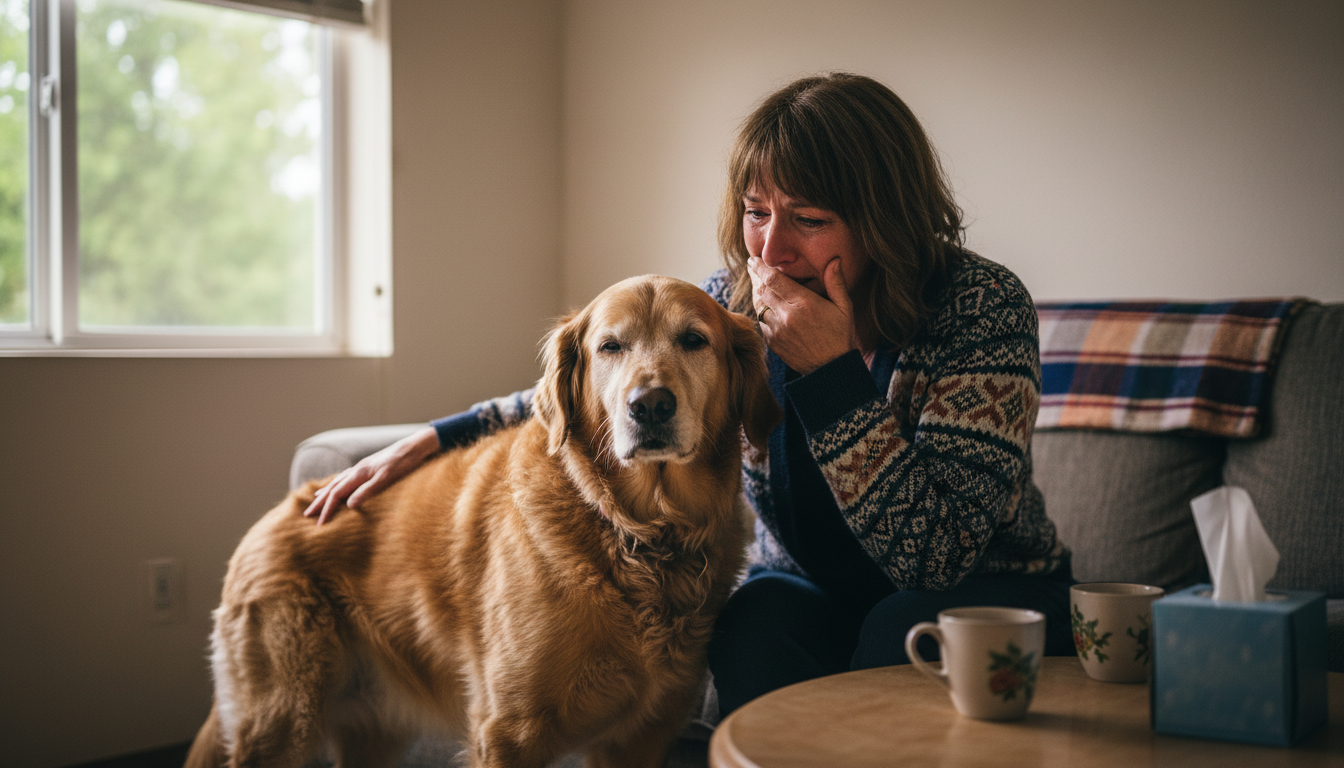
It began with a phone call that Julie and Mark Reynolds almost didn’t answer. It was a Tuesday evening in San Antonio, Texas, the kind of humid, quiet night where the routine of family life usually takes precedence over unexpected interruptions. The number on the caller ID was unfamiliar, displaying an area code from nearly a thousand miles away. When Julie finally picked up, the voice on the other end asked a question that would bring a six-year emotional journey to a stunning conclusion: “Do you own a dog named Buster?”
For a moment, the room fell silent. Buster, a golden retriever mix with a distinctive white patch on his chest, had vanished from the Reynolds’ backyard more than half a decade earlier. The idea that a dog found after six years could still be alive, let alone identified and linked back to them, seemed impossible. Yet, according to the shelter staff on the line, the miracle was real.
The Day the Gate Was Left Open
To understand the gravity of this reunion, one must look back to the summer of 2017. The Reynolds family had adopted Buster as a rescue puppy. He was energetic, loyal, and deeply attached to the couple’s two young children. However, during a landscaping project, a contractor inadvertently left the side gate unlatched. By the time the family realized the mistake, Buster was gone.
“We searched for months,” Mark Reynolds told local reporters recounting the event. “We put up flyers, we posted in every Facebook group, and we visited the county shelter every single week. Eventually, you have to stop looking, but you never stop wondering.”
The statistics surrounding lost pets are often grim. According to the American Society for the Prevention of Cruelty to Animals (ASPCA), approximately 6.5 million companion animals enter U.S. animal shelters nationwide every year. While many are strays, a significant portion are lost family pets. Without identification, the odds of a reunion drop precipitously as time passes. For the Reynolds family, as weeks turned into years, the hope of seeing Buster again faded into a dull ache—a memory of a beloved family member who simply vanished.
The Discovery in Colorado
Six years later and over 900 miles away, a scruffy, aging dog was picked up by animal control officers in a suburb of Denver, Colorado. He was wandering near a park, moving slowly and showing signs of arthritis, but otherwise appeared fed, suggesting he had been cared for by someone during his missing years, or perhaps bounced between homes.
Following standard protocol, the intake staff at the local humane society scanned the dog for a microchip. This small piece of technology, no larger than a grain of rice, is often the only link between a lost animal and their original home. A loud beep confirmed the presence of a chip. When the staff looked up the registration number in the national database, it didn’t lead to a local address. Instead, it pointed back to a family in San Antonio who had registered the chip in 2015.
Shelter director Sarah Jenkins noted the rarity of the situation in an interview with local news. “We see reunions often, usually after a few days or weeks. To have a dog found after six years and successfully identified is a testament to the durability of microchip technology and the importance of keeping contact information updated,” Jenkins explained. “If the family had changed their phone number and not updated the registry, this call would have been a dead end.”
The Long Journey Home
Once the shock wore off, the logistics of the reunion began. The Reynolds family immediately began planning the trip to Colorado. The uncertainty was palpable: Would Buster remember them? Was he the same dog? Six years is a lifetime in dog years; he had left as a vibrant young adult and was returning as a senior.
When the family arrived at the shelter, the atmosphere was thick with anticipation. Video footage captured by shelter staff shows Mark and Julie kneeling on the concrete floor of the meet-and-greet room. When the handler brought Buster in, the dog hesitated initially. He sniffed the air, his tail tucked slightly between his legs.
Then, Mark whistled—a specific, two-note whistle he used to call Buster for dinner years ago. The dog’s ears perked up. He took a tentative step forward, sniffed Mark’s hand, and the transformation was instant. The dog’s tail began to wag, his entire body wiggled, and he let out a soft whine, pressing his head into Julie’s chest. It was a moment of pure, unadulterated recognition.
The Bond That Endures
The emotional weight of such reunions highlights the profound bond between humans and their animal companions. It isn’t just about ownership; it is about a shared history. For the Reynolds, getting Buster back was like reclaiming a piece of their family history that had been stolen.
Veterinary behaviorists suggest that while dogs perceive time differently than humans, their olfactory memory—memory based on scent—is incredibly long-lasting. Research into canine cognition indicates that dogs can remember specific people and other animals for years, especially those with whom they had a strong emotional connection. Buster’s reaction confirmed what every dog lover hopes: they don’t forget us.
The Critical Lesson: Microchip Your Pets
While the emotional narrative takes center stage, the practical lesson of Buster’s story cannot be overstated. This reunion was only possible because of a microchip. Collars can fall off, and tags can become illegible, but a microchip is permanent.
“This is exactly why we advocate for chipping every single pet,” said Dr. Emily Carter, a veterinarian consulted on the importance of pet identification. “It is not a GPS tracker, which is a common misconception. It is a proof of ownership and a permanent ID card. But it only works if you register it.”
The Reynolds family admits they had almost forgotten about the chip. They hadn’t updated their address in the portal when they moved houses within San Antonio, but thankfully, they had kept the same cell phone numbers. That small detail made the difference between a reunion and a tragedy.
Life After the Return
Today, Buster is back in Texas. The transition hasn’t been entirely seamless; he is an older dog now, requiring joint supplements and a softer bed than he did six years ago. He also has to adjust to the family’s new dynamic, which includes a cat adopted during his absence.
However, reports from the family indicate that he has settled in with remarkable ease. He sleeps at the foot of the bed, just as he did in 2017. For the Reynolds, the gray hairs on his muzzle are a reminder of the time lost, but also of the miracle that brought him back.
This story of a dog found after six years serves as a beacon of hope for thousands of families currently missing a pet. It is a reminder to never fully give up, to check local shelters, and most importantly, to ensure that every pet is microchipped and registered. Sometimes, against all odds, they do come home.
For more incredible stories about animals finding their way back to the people who love them, read our feature on extraordinary cat reunions that defied the odds.