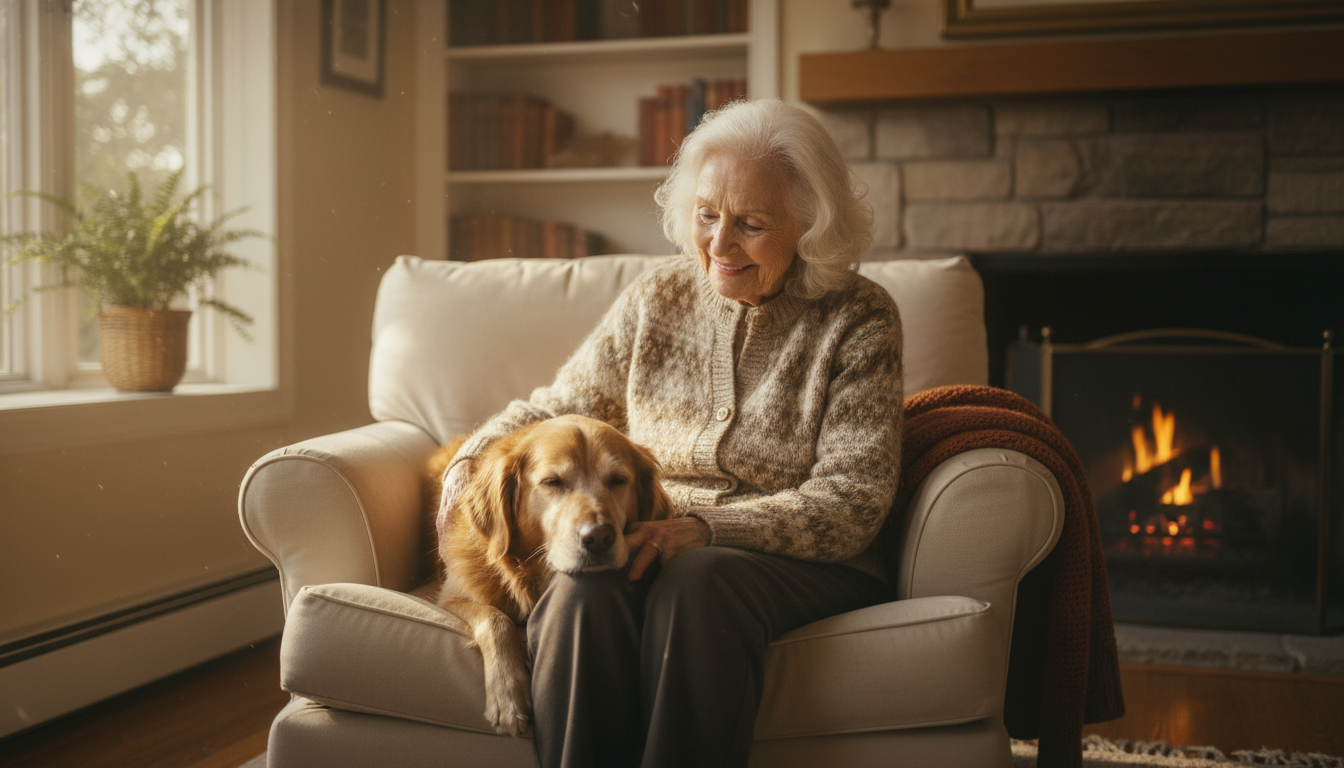
For eighty-two-year-old Margaret, the silence in her suburban bungalow had become deafening. After losing her husband of fifty years to a sudden illness, the days stretched into weeks of quiet isolation. Her children called often, but they lived states away, busy with their own families and careers. Margaret, a retired librarian, found herself wandering through rooms that felt too large, filled with memories but devoid of life. It was a loneliness that many seniors experience, a creeping sense of invisibility that health professionals cite as a significant risk factor for decline in the elderly.
Miles away, in a municipal animal shelter, a twelve-year-old Golden Retriever mix named Barnaby faced a grim uncertainty. His previous owner had passed away, leaving him without a home. In the high-stress environment of the kennel, surrounded by the frantic barking of younger, energetic dogs, Barnaby shut down. He spent his days curled in the back of his run, his gray-muzzled face pressed against the concrete. According to shelter staff, senior dogs like Barnaby are often the hardest to place. Potential adopters usually walk right past them, favoring puppies or young adults, unaware that the older dogs often have the most love to give.
The Intersection of Two Lonely Lives
The turning point came when Margaret’s doctor suggested she consider a companion animal to help with her isolation. Initially, she was hesitant. “I’m too old for a puppy,” she reportedly told her daughter. “I can’t chase a dog around the yard.” However, a local rescue organization, specializing in what is known as “Seniors for Seniors” placement programs, offered a different solution: senior dog adoption.
These programs are designed specifically to match elderly individuals with older pets. The logic is sound and heartwarming: older dogs usually have lower energy requirements, are already house-trained, and are looking for exactly what the senior human offers—companionship and a quiet place to rest.
When Margaret visited the shelter, accompanied by a volunteer, she didn’t look at the jumping puppies. She asked to see the dogs that nobody else wanted. That was when she met Barnaby. According to the volunteer present that day, the connection wasn’t explosive; it was gentle. Barnaby, who had been despondent for weeks, slowly stood up, walked to the front of the kennel, and pressed his forehead against the wire mesh where Margaret had placed her hand. It was a silent agreement between two souls who had felt left behind.
The Reality of Senior Dog Adoption
Bringing Barnaby home wasn’t just an emotional salve; it was a practical adjustment. The first few nights were tentative. Barnaby, confused by yet another change in environment, paced the hallway. Margaret, unused to caring for another living being after months of solitude, worried she had made a mistake.
However, within a week, a routine emerged. The bond between senior dogs and their owners is often built on shared pacing. They didn’t need to hike mountains; they simply needed to walk to the end of the block. According to the Centers for Disease Control and Prevention (CDC), pet ownership can significantly decrease blood pressure, cholesterol levels, and feelings of loneliness. For Margaret, the physical act of getting up to feed Barnaby and the necessity of short, daily walks reintroduced structure to her day.
“He gave me a reason to wake up,” Margaret shared with the shelter staff during a follow-up visit. “I realized that he needed me just as much as I needed him.”
The Science Behind the Bond
The connection Margaret and Barnaby formed is backed by behavioral science. Studies from major veterinary universities indicate that the presence of a pet increases oxytocin levels in the brain—the hormone responsible for bonding and stress relief. For seniors, who may experience a reduction in physical touch and social interaction, the presence of a dog like Barnaby provides a crucial neurological boost.
Furthermore, Barnaby’s presence acted as a social catalyst. Neighbors who hadn’t seen Margaret in months stopped to pet the dog and chat. The senior dog, with his gentle demeanor and slow gait, was approachable. He reconnected Margaret to her community.
Why Senior Dogs are Often Overlooked
Despite stories like Margaret’s, the statistics remain challenging for older animals. According to the ASPCA, senior animals have a longer length of stay in shelters compared to younger counterparts. Adopters often fear high veterinary bills or the emotional toll of a pet reaching the end of its life shortly after adoption.
However, advocates argue that the quality of time outweighs the quantity. The gratitude shown by a rescue dog that has experienced loss is profound. Shelter workers frequently report that senior dogs seem to understand they have been saved, displaying a depth of loyalty that is distinct from younger animals.
“Adopting a senior dog is an act of compassion, but the reward is often greater for the human,” said the director of the rescue center involved in Barnaby’s adoption. “They don’t ask for much—just a warm bed and a hand to hold.”
A New Chapter for Both
Today, six months after adoption, the transformation is visible. Margaret is more active, her doctor reports improved vitals, and the silence in her home has been replaced by the comforting sound of Barnaby’s paws on the hardwood floor. Barnaby, once a depressed shelter statistic, is now a beloved neighborhood fixture, his coat shiny and his tail always wagging when Margaret enters the room.
Their story serves as a powerful reminder to potential adopters. When looking for a pet, look past the gray muzzle and the slow walk. You might find that a senior dog adoption isn’t just about saving a life—it might be about saving your own.
How You Can Help
If Margaret and Barnaby’s story has inspired you, consider visiting your local shelter and asking to see the senior dogs. Many organizations offer discounted adoption fees for senior citizens adopting senior pets, ensuring that financial barriers don’t stand in the way of these life-changing connections. In the end, love doesn’t have an age limit.