The smell of smoke is something that never truly leaves you. For the Henderson family, it wasn’t just the scent of burning timber that lingered long after the firetrucks had departed; it was the overwhelming silence of a home that no longer existed. In the span of three hours, an electrical fire had reduced their two-story suburban house to a shell of charred wood and wet ash. While Michael, Sarah, and their two young daughters, Emily and Mia, had escaped physically unharmed, the emotional toll was immediate and crushing.
Displaced and living in a cramped rental apartment, the family struggled to find a sense of normalcy. The trauma of that night—waking up to alarms, the rush into the cold night air, watching everything they owned disappear—had left a void that insurance checks and sympathetic neighbors couldn’t fill. But as is often the case in the most extraordinary real-life stories, healing came from an unexpected source. It arrived on four paws, with a wagging tail and a spirit that mirrored their own resilience.
The Moment Everything Changed
Two months after the fire, the gloom over the Henderson household was palpable. According to Sarah, the silence in their temporary apartment was deafening. "We were safe, and we knew we should be grateful," she told local reporters later. "But we weren’t living. We were just existing, waiting for the next bad thing to happen."
It was a Saturday morning when Michael suggested a drive to the County Animal Shelter. It wasn't a planned decision to adopt; rather, it was a desperate attempt to distract the children, who had been plagued by nightmares since the incident. The shelter, a noisy, echoing hallway of barking dogs and hopeful eyes, seemed like an unlikely place to find peace.
Then they saw him. In kennel number 42 sat a scruffy, golden-mixed breed dog named "Rusty." Unlike the other dogs jumping against the chain-link fences, Rusty sat quietly, pressing his side against the wire, watching them with soulful, amber eyes. Shelter staff explained that Rusty had been found wandering near a construction site, malnourished and wary of loud noises. He had been in the shelter for over four months, overlooked for younger, more energetic puppies.
The Bond Between Humans and Animals
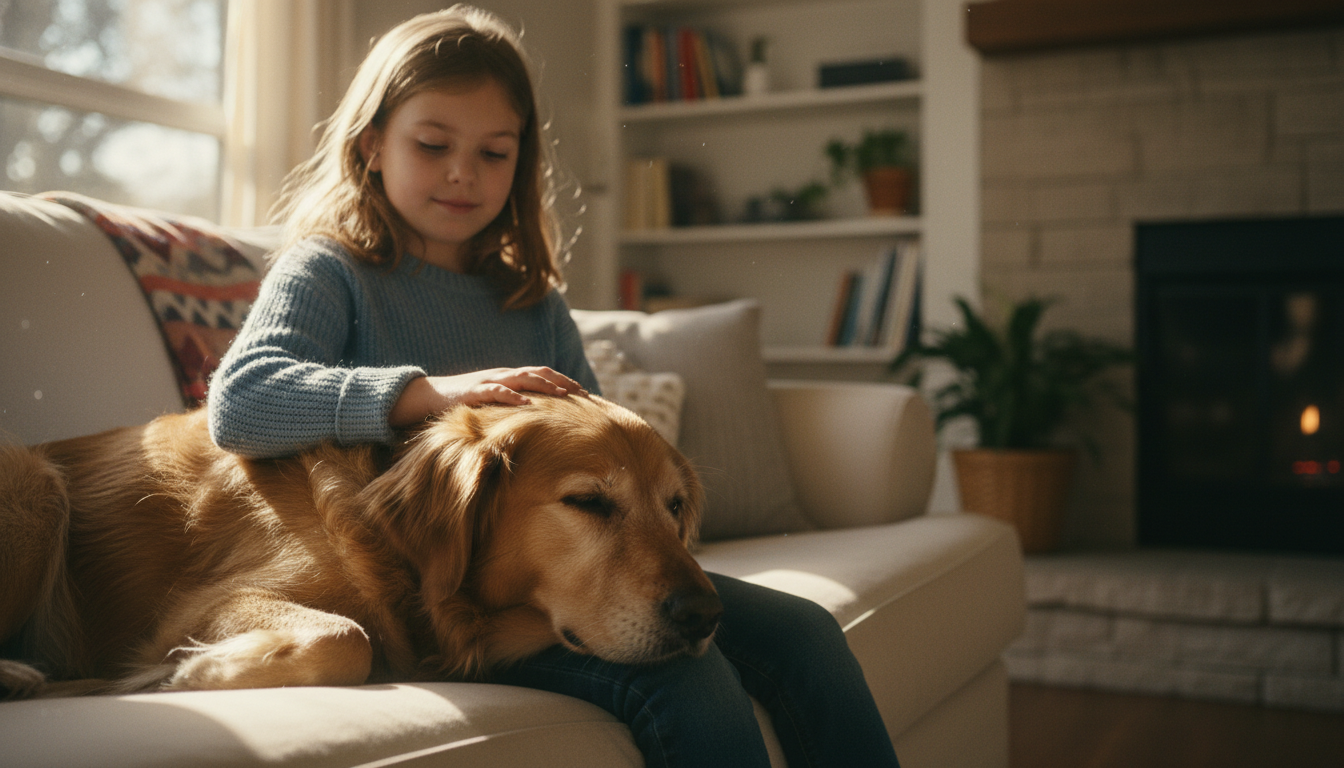
The connection was instantaneous. When the shelter volunteer brought Rusty into the meet-and-greet room, he didn't jump or bark. He simply walked over to seven-year-old Mia, who was sitting on the floor, and rested his head on her lap. It was the first time Mia had smiled in weeks.
"It was as if he knew," Michael recalled. "He didn't need us to be happy or energetic. He just needed us to be there, and we needed him to remind us that it was okay to rest."
According to the ASPCA, the companionship of a pet can significantly lower stress levels and help individuals cope with trauma. For the Hendersons, adopting Rusty wasn't just about saving a dog; it was about reclaiming their ability to care for something, to look forward to the future rather than dwelling on the past.
Impact on the People and Community
Bringing Rusty home—to their temporary rental—shifted the family's dynamic almost overnight. The focus turned from what they had lost to what they needed to do for Rusty. Walks in the park replaced hours of silent brooding. The girls began to sleep through the night, comforted by the sound of Rusty's rhythmic breathing from his bed in the corner of their room.
The impact rippled outward. Neighbors in the apartment complex, who had previously only offered polite nods, began stopping to pet Rusty. He became a bridge, connecting the isolated family back to the community. "He forced us to go outside," Sarah said. "He forced us to talk to people, to laugh at his clumsy antics, to live in the present moment."
For more heartwarming tales of rescue and recovery, you can read about other incredible animal rescues on our site.
Background & Credible Sources
This phenomenon of "post-trauma adoption" is well-documented by veterinary professionals and psychologists alike. Dr. Emily Carter, a veterinarian who works with rescue organizations, notes that animals often sense human emotional states. "Dogs are incredibly attuned to cortisol levels and body language," Dr. Carter explained in an interview regarding therapy animals. "When a family is grieving, a dog like Rusty often steps into a role of a silent guardian. They provide non-judgmental support that humans sometimes cannot offer one another."
Furthermore, local shelter statistics indicate that "hard-to-adopt" dogs—those who are older or have been in shelters longer—often form the deepest bonds with their adopters. They seem to understand the gravity of their second chance, mirroring the gratitude of families who have survived disasters.
What Happens Next
Today, the Henderson family is back in a rebuilt home, standing on the same lot where the fire once took everything. But the house feels different now. It isn't just filled with new furniture; it is filled with the click-clack of Rusty’s claws on the hardwood floors. Rusty, once a stray with no name, is now the heart of the household.
The family has since become advocates for the shelter where they found him, organizing donation drives to help other animals find their forever homes. They often tell friends that while the fire took their possessions, it led them to the one thing they couldn't buy: hope.
For those considering bringing a pet into their lives, remember that the perfect companion might be waiting in a kennel right now, looking for a second chance just like you. Discover more about the unbreakable human-animal bond and how it changes lives every day.
In the end, the fire was a tragedy, but the arrival of Rusty was a miracle. It serves as a powerful reminder that sometimes, when you have lost everything, you find exactly what you need in the eyes of a shelter dog.