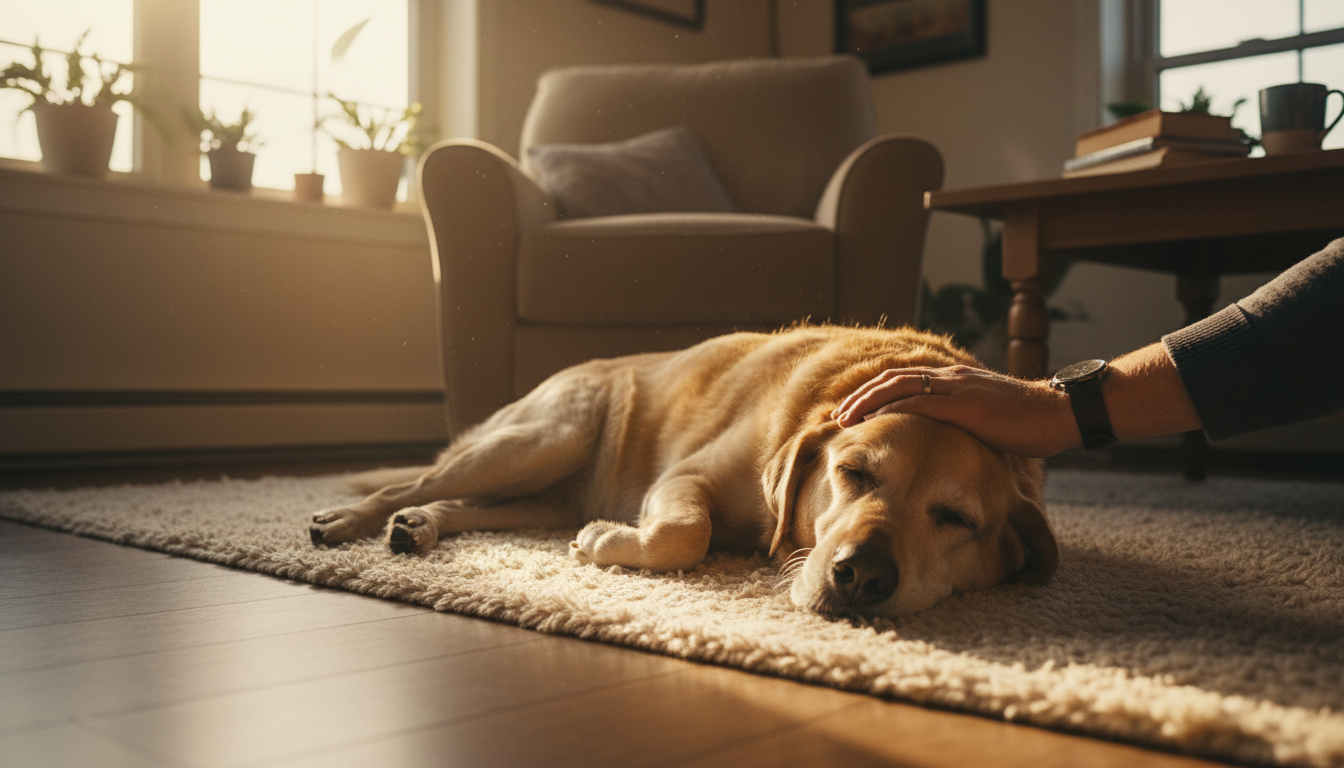
When the Henderson family first walked into the county animal shelter, they had a very specific plan in mind. They were there to provide a temporary bridge—a warm bed and a few weeks of comfort—for a dog that no one else wanted. They had signed up as hospice fosters, a role that requires a steely resolve and a heart prepared for inevitable heartbreak. They were not looking for a permanent addition. They were not looking for a miracle. But as anyone seasoned in the world of animal rescue knows, the most profound stories often begin where plans end.
This is the story of Buster, a 14-year-old Labrador mix who was surrendered to the shelter system confused, arthritic, and grieving. It is also the story of how a temporary act of kindness transformed into a permanent bond that defied medical expectations and redefined what the Hendersons understood about resilience, loyalty, and the power of a second chance. It serves as a powerful reminder of why the senior dog foster experience is often the most rewarding journey in animal welfare.
The Arrival of the ‘Unadoptable’
According to intake records from the local humane society, Buster arrived with a laundry list of ailments that made him statistically unlikely to leave the facility alive. He was partially deaf, suffered from significant hip dysplasia, and showed signs of advanced canine cognitive dysfunction (dementia). For many potential adopters, these are insurmountable barriers. For the Hendersons, they were the very reason to step in.
“We were told he likely had a month, maybe two,” Mark Henderson explained in an interview regarding the initial placement. “The goal wasn’t to fix him. The goal was simply to ensure he didn’t pass away on a concrete floor.”
The family prepared a quiet corner in their living room, laid down orthopedic mats, and prepared for a somber few weeks. The first two nights were difficult. Buster paced anxiously, confused by his new surroundings, a common symptom of cognitive decline in senior animals. However, by the third day, something shifted. The dog who was barely expected to lift his head began to follow Mark, a retired veteran, from room to room.
A bond That Defied Diagnosis
The turning point in this senior dog foster journey occurred roughly ten days into Buster’s stay. The Hendersons had established a routine involving small, manageable meals and very short, slow walks in the backyard. According to veterinary literature, consistent routine and high-quality nutrition can sometimes alleviate symptoms of cognitive dysfunction, but Buster’s improvement was drastic.
Mark Henderson noted that Buster began anticipating his arrival at the door. The dog’s clouded eyes seemed to brighten, and the pacing stopped. But the most shocking development was physical. The dog who needed assistance standing up was suddenly greeting the family at the door with a wagging tail.
“It was as if he decided he wasn’t done yet,” Sarah Henderson, Mark’s wife, told reporters. “We thought we were watching him fade, but we were actually watching him wake up.”
This phenomenon is not entirely uncommon in rescue scenarios. According to the Grey Muzzle Organization, a group dedicated to the well-being of at-risk senior dogs, the stress of a shelter environment can artificially suppress a dog’s immune system and energy levels. Once removed from the noise and fear of the kennels, many senior dogs experience a “decompression” phase that reveals a vitality masked by stress.
The Decision to Fail
In the world of animal rescue, a “foster fail” is the affectionate term used when a temporary foster family decides to legally adopt the animal in their care. For the Hendersons, the conversation didn’t happen all at once. It was a gradual realization that removing Buster from the home where he had found his second wind would be detrimental to his health.
The pivotal moment came during a check-up at the veterinary clinic. The veterinarian, who had initially offered a grim prognosis, was stunned by Buster’s weight gain and improved mobility. While his chronic conditions remained, his quality of life had skyrocketed. The vet suggested that moving him again could trigger a regression.
“We looked at each other in the exam room,” Mark recalled. “And we realized we weren’t just his hospice care anymore. We were his family.”
That afternoon, the Hendersons signed the adoption papers. The dog who was supposed to be a two-week visitor had officially become a permanent resident.
The Importance of Fostering Senior Dogs
Buster’s story is a testament to the critical need for fosters willing to take on hard cases. Data from the ASPCA suggests that senior dogs have significantly lower adoption rates compared to puppies and young adults. They are often overlooked due to fears regarding medical costs and shorter lifespans. However, stories like the Hendersons’ highlight the immense emotional return on investment.
By opening their home to a senior dog foster, the family didn’t just save a life; they enriched their own. They discovered that Buster’s calm presence provided a sense of grounding for the household. Mark, who had struggled with the quiet of retirement, found a new sense of purpose in managing Buster’s care regimen.
For readers considering fostering, it is important to note that many shelters offer medical coverage for foster animals, removing the financial barrier that prevents people from helping seniors. Fostering saves lives by freeing up kennel space and providing detailed personality profiles that help animals get adopted.
A New Lease on Life
Today, six months past his initial “expiration date,” Buster is still a beloved member of the Henderson household. He spends his days sunbathing on the porch and his evenings curled up at Mark’s feet. While his muzzle is gray and his steps are slow, his tail still wags with the vigor of a much younger dog.
The family hopes their experience encourages others to look past the grey muzzles in the shelter. They thought they were signing up for a sad ending. Instead, they found a beautiful new beginning.
“He didn’t just need a place to die,” Sarah said. “He needed a reason to live. And we are so grateful we got to be that reason.”
For more heartwarming stories about the unbreakable bond between humans and animals, read about why adopting seniors matters or explore our guide on incredible rescue transformations.