For seasoned animal rescuers, the first rule of fostering is usually the hardest to follow: don’t get too attached. The goal is to provide a temporary safe haven, rehabilitate the animal, and then say goodbye so there is space to save another. But for the Thompson family, experienced fosters who had successfully rehomed over a dozen animals, a scruffy, terrified tuxedo cat named Jasper would prove to be the exception to their strictest rule.
It wasn’t immediate love at first sight, nor was it an easy transition. In fact, for the first three weeks, the Thompsons were certain that Jasper would be better off in a quiet, single-person household. However, a single, dramatic night—involving a severe thunderstorm and a medical emergency—shifted the dynamic entirely, transforming a temporary arrangement into a lifelong bond. This is the story of how a misunderstood foster cat found his forever home in the most unexpected way.
The Assignment: A “Hard Luck” Case
According to intake records from the local humane society, Jasper had been found in an industrial park, malnourished and suffering from a severe upper respiratory infection. At approximately two years old, he had likely never known life indoors. Shelter staff noted that he was “shut down”—a term used in animal welfare to describe animals that are so overwhelmed by fear they become catatonic or unresponsive.
“We agreed to take him because we had a spare room and the patience to let him decompress,” Sarah Thompson shared in an interview about their fostering journey. “Our intention was strictly rehabilitation. We wanted to get him healthy, socialize him just enough to be adoptable, and then move on to the next urgent case.”
For the first month, Jasper lived under the guest bed. He would only eat when the house was silent. The family respected his boundaries, utilizing techniques recommended by animal behaviorists, such as slow blinking and sitting quietly in the room without forcing interaction. It was a slow, grueling process that tested their resolve.
The Night That Changed Everything
The turning point came during a severe late-summer storm. The Thompsons reside in an area prone to power outages, and that Tuesday night, the grid went down just as the thunder began to shake the house. While the family gathered in the living room with flashlights, Sarah realized they hadn’t checked on Jasper in several hours.
Usually, loud noises would drive a feral-leaning cat deeper into hiding. However, when Sarah opened the door to the guest room, she found Jasper not under the bed, but pacing frantically and panting—a sign of extreme distress in felines. As she stepped in with a flashlight, Jasper didn’t retreat. Instead, for the first time since arriving, he ran toward her, pressing his body against her legs.
“It wasn’t just fear of the storm,” Sarah recalled. “He was in physical distress.”
Upon closer inspection, Sarah realized Jasper was suffering from a urinary blockage, a life-threatening condition in male cats that requires immediate intervention. The pacing and the storm-induced anxiety had masked the symptoms until they became critical. With the roads slick with rain and the power out, the family had to make a split-second decision.
A Race Against Time
Veterinary professionals emphasize that urinary obstructions can be fatal within 24 to 48 hours if left untreated. According to the ASPCA, this condition is one of the most common medical emergencies for male cats and often results in euthanasia in shelter environments due to the high cost of treatment and aftercare.
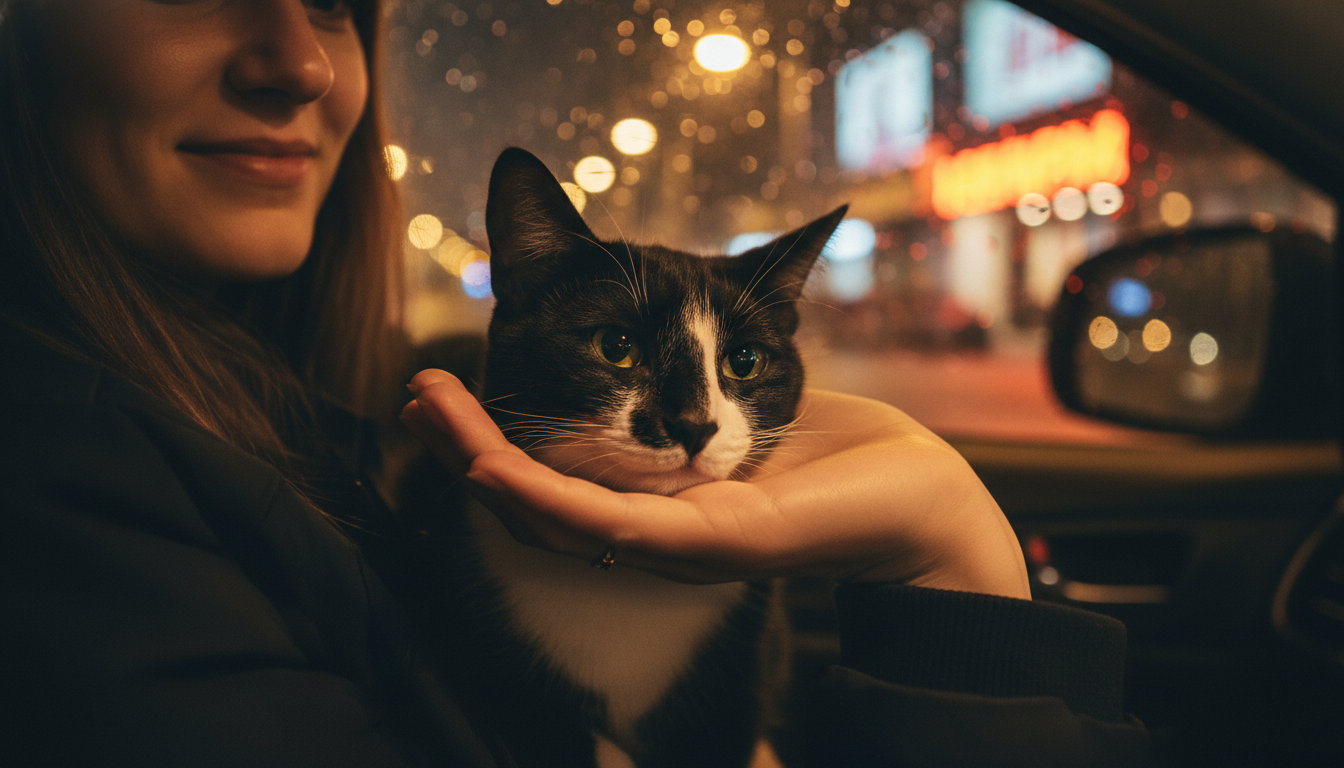
The Thompsons rushed Jasper to the nearest 24-hour emergency vet. During the car ride, the normally aloof cat allowed Sarah to hold him wrapped in a towel, resting his head on her hand. It was a moment of vulnerability that broke through the weeks of distance.
“In the lobby of the emergency clinic, the vet explained the costs and the recovery time,” Sarah said. “As fosters, the shelter usually covers basic costs, but emergency surgery is a gray area. There was a moment where we had to decide if we were just his temporary guardians or his advocates. Looking at him, terrified and in pain, we knew we couldn’t let him go.”
The Recovery and the Realization
Jasper survived the surgery. The recovery process required round-the-clock care, including medication management and monitoring his intake—tasks that required intimate trust between the cat and the handler. Over the next ten days of recovery, the dynamic in the house shifted permanently.
The cat who once lived under the bed now required to be near Sarah or her husband, Mark, constantly. The trauma of the medical emergency, combined with the relief of being cared for, had seemingly rewired his association with humans. He began sleeping at the foot of their bed, greeting them at the door, and even soliciting belly rubs.
“The shelter called to check on his status and to see if he was ready to be listed for adoption,” Mark explained. “Sarah and I looked at each other, and then at Jasper, who was currently purring on my lap. We realized we had already failed. He was home.”
The Impact of “Foster Failing”
The term “foster fail” is used lovingly in the rescue community to describe when a foster parent adopts their charge. While organizations like to keep foster homes open for new intakes, “failing” is often celebrated as the ultimate success story for the animal.
For the Thompsons, adopting Jasper meant one less spot for a new foster temporarily, but it also meant saving a cat deemed “unadoptable” by initial shelter standards. Their story highlights a crucial aspect of animal rescue: some animals require a specific trauma or a breakthrough moment to reveal their true personalities.
If you are interested in reading more about how medical emergencies can strengthen the human-animal bond, read our coverage on senior dog rescue miracles that defy the odds.
Why This Story Matters
Jasper’s transformation from a shut-down stray to a beloved family member underscores the importance of patience in animal rescue. It serves as a reminder that an animal’s behavior in a shelter cage is rarely indicative of their behavior in a loving home. It also highlights the critical role foster families play in identifying medical or behavioral needs that might go unnoticed in a busy kennel environment.
“We didn’t expect to keep him,” Sarah admitted. “But that one night, when he needed us and we needed to save him, the contract changed. It wasn’t about fostering anymore; it was about family.”
Final Thoughts
Today, Jasper is a healthy, vocal, and affectionate cat who has fully claimed the Thompson household as his own. While the family has since returned to fostering other kittens, Jasper serves as the resident “uncle,” helping new arrivals settle in.
For those considering fostering, the Thompsons offer this advice: go in with an open heart, but be prepared for the unexpected. Sometimes, the animals we think we are just helping for a weekend end up changing our lives forever. For more heartwarming tales of second chances, check out our feature on stray cats who chose their owners.