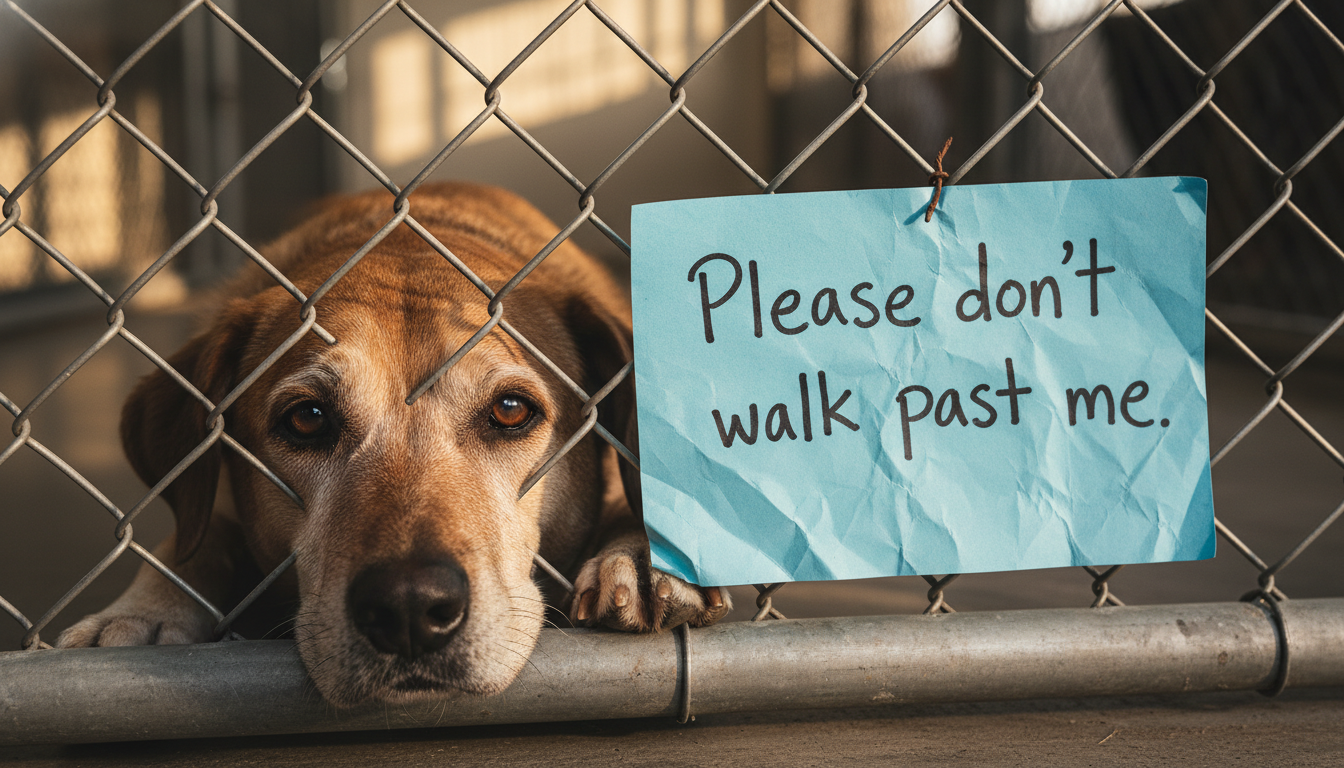
In the high-decibel environment of a municipal animal shelter, silence is often the loudest cry for help. For Baxter, a 12-year-old Labrador mix with a graying muzzle and soulful, cloudy eyes, the noise of barking dogs and clanging metal gates had become the backdrop to a lonely, seemingly endless wait. He had spent over four months in a kennel run, watching potential adopters walk past him in favor of younger, more energetic puppies.
Baxter was a victim of what shelter workers call the "invisible dog" syndrome. He didn’t jump at the gate. He didn’t bark for attention. He simply lay on his bed, resigned to his fate, waiting for a family that never seemed to come. That was, until a volunteer decided to speak for him. A simple, handwritten note attached to his kennel door would go on to shift the trajectory of his life, proving that sometimes, the smallest gestures create the biggest waves in the world of animal rescue.
The Invisible Plight of Senior Dogs
Baxter’s story is heartbreakingly common. According to data from the ASPCA and other animal welfare organizations, senior dogs face significantly lower adoption rates compared to their younger counterparts. While puppies are often adopted within days, seniors can languish in shelters for months or even years. Potential adopters frequently worry about future veterinary costs or the shorter time they will have with an older pet, overlooking the immense benefits of adopting a senior: they are often house-trained, calmer, and deeply grateful.
Staff at the shelter described Baxter as a "perfect gentleman." He walked well on a leash, loved soft treats, and wanted nothing more than a warm carpet to nap on. However, in a shelter environment, these subtle traits are easily overshadowed by the high energy of other dogs. "It’s difficult to market a dog who just sleeps when people walk by," one shelter coordinator explained in a discussion about senior adoption challenges. "People want a connection, but the environment shuts these older dogs down."
The Note That Stopped the Crowd
The turning point for Baxter came on a Tuesday afternoon. A long-time volunteer, noticing that Baxter had stopped coming to the front of his kennel entirely, decided to intervene. Instead of the standard laminated card listing his age and breed, she grabbed a piece of colored paper and a thick marker.
She wrote a note from Baxter’s perspective, pinning it to the chain-link fence at eye level. It didn’t list medical stats or behavioral assessments. It read:
"I am not sick, and I am not ‘bad.’ I am just old, and my family couldn’t keep me. I promise to be the best boy if you just give me a soft place to sleep. Please don’t walk past me."
The effect was almost immediate. The raw emotional honesty of the note cut through the noise of the shelter. Visitors who would have normally walked past the sleeping lump of fur stopped to read the sign. Staff reported seeing people wiping away tears after reading the handwritten plea. The note humanized Baxter, transforming him from "just another stray" into a living, feeling being with a history and a broken heart.
The Power of Community and Social Media
The impact of the note extended far beyond the physical walls of the shelter. A visitor snapped a photo of Baxter sleeping next to his sign and posted it to a local community Facebook group. The post went viral within hours, garnered hundreds of shares and comments from people touched by the senior dog’s simple request.
This digital ripple effect is crucial for modern animal rescue. As discussed in other rescue stories on our site, social media often bridges the gap between overlooked animals and their future families. The photo of Baxter’s note highlighted a universal truth: everyone wants to be seen, and everyone deserves a second chance, regardless of age.
In the comment sections, community members tagged friends and family, urging them to go meet the dog. Donations for his adoption fees poured in, and the shelter received multiple inquiries about his status. The narrative had shifted from "nobody wants this old dog" to "we must save this dog."
A New Beginning for Baxter
Among those who saw the viral post was the Henderson family. They hadn’t been looking for a dog, let alone a senior, but the image of the handwritten note struck a chord they couldn’t ignore. "We saw his face and that sign, and we just knew," the family told shelter staff during their meet-and-greet.
When the Hendersons arrived at the shelter, the staff warned them that Baxter might be slow to warm up due to kennel stress. However, when the kennel door opened, the old dog seemed to sense that his wait was over. He slowly wagged his tail, leaned his head against Mrs. Henderson’s leg, and let out a deep sigh.
The adoption was finalized that same afternoon. Baxter, the dog who had waited months for a single glance, walked out of the shelter surrounded by cheering staff and volunteers. The note that saved his life was taken down, no longer needed.
The Importance of Advocacy
Baxter’s journey serves as a powerful reminder of the importance of advocacy in animal welfare. It wasn’t a complex marketing campaign or a celebrity endorsement that saved him—it was a piece of paper and a moment of compassion from a volunteer who refused to let him be invisible.
For those considering adding a pet to their home, Baxter’s story highlights the unique joy of senior dog adoption. These animals often require less training and exercise, offering pure companionship and loyalty in return for a comfortable retirement. By choosing to adopt a senior, families aren’t just saving a life; they are gaining a best friend who knows exactly how lucky they are.
Today, Baxter spends his days on a plush orthopedic bed and his evenings on the sofa with his new family. He is no longer a number in a system or a face behind a gate. He is a beloved family member, proving that love has no expiration date.