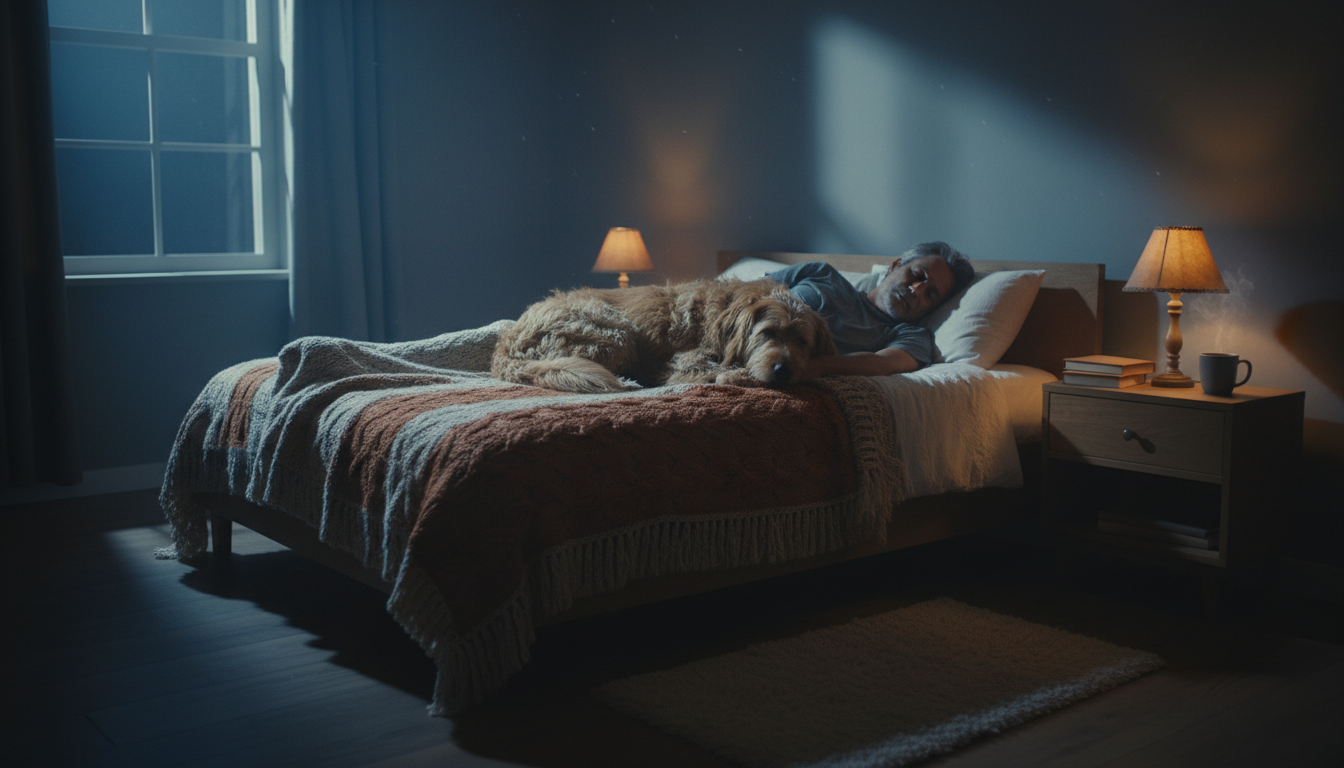
For nearly five years, the silence of the night was the loudest enemy for former Army Sergeant James Miller. Like thousands of veterans returning to civilian life, James brought the battlefield home with him, not in his luggage, but in his neural pathways. His nights were characterized by hypervigilance, broken sleep, and the exhausting cycle of insomnia associated with Post-Traumatic Stress Disorder (PTSD).
That was until he met Barnaby, a scruffy, overlooked Golden Retriever mix with a scarred ear and a history of anxiety. In a story that highlights the profound healing power of the human-animal bond, this unlikely pair saved each other. This isn’t just a story about adopting a pet; it is a testament to how a shelter dog helps a veteran reclaim his life when traditional medicine fell short.
The Silent Battle After Service
According to the U.S. Department of Veterans Affairs, between 11% and 20% of veterans who served in Operations Iraqi Freedom and Enduring Freedom have PTSD in a given year. For James, the statistics were a lived reality. After returning to his home in Ohio, the transition to a quiet suburban life was jarring. The lack of structure and the absence of his unit left a void that was quickly filled by anxiety.
“I would wake up every hour, checking the locks, checking the windows,” James shared in a report on local veteran rehabilitation efforts. “The silence wasn’t peaceful; it was threatening. My brain wouldn’t turn off.”
James tried various therapies and medications prescribed by VA doctors. While they helped manage daytime symptoms, the nights remained a battleground. Sleep deprivation began to affect his ability to hold down a job and strained his relationships with family members. It wasn’t until a therapist suggested an emotional support animal that James considered a different kind of prescription.
A Visit to the County Shelter
James was skeptical. He didn’t want the responsibility of a puppy, and he wasn’t sure he was capable of caring for another living being when he was barely caring for himself. However, on a rainy Tuesday in November, he walked into the local county animal control facility.
The shelter was loud, filled with the barking of dogs vying for attention. But in the back corner of the kennel run sat Barnaby. The three-year-old mix had been returned twice by previous adopters who claimed he was “too clingy” and “hated being alone.”
Shelter staff noted that Barnaby had his own trauma. Found as a stray with injuries consistent with life on the street, Barnaby was terrified of thunderstorms and loud noises. When James approached the cage, Barnaby didn’t bark. He simply walked to the front of the gate and pressed his forehead against the chain-link fence, closing his eyes.
“It was a moment of recognition,” James later told shelter volunteers. “He looked as tired as I felt.”
The First Nights Home
The adoption process was swift, and Barnaby went home with James that same week. The first few nights were an adjustment period. Barnaby, true to his file, was anxious. He paced the house, his nails clicking on the hardwood floors, mirroring James’s own restlessness.
However, the dynamic shifted on the fourth night. James woke up from a nightmare, his heart racing, breath coming in short gasps. Usually, this would be the start of a sleepless pacing routine that lasted until dawn.
But this time, he wasn’t alone. Barnaby, who had been sleeping on a rug beside the bed, sensed the change in James’s physiology. In a move that animal behaviorists often describe as instinctive “deep pressure therapy,” Barnaby climbed onto the bed. He didn’t play or beg for attention. Instead, he laid his heavy head squarely on James’s chest and let out a long, heavy sigh.
The weight of the dog and the rhythmic sound of Barnaby’s breathing acted as a ground anchor for James. For the first time in years, the veteran’s heart rate slowed down in response to another living being. They fell asleep like that—the veteran and the stray—and didn’t wake up until the sun came through the blinds.
The Science Behind the Bond
What happened between James and Barnaby is supported by science. Research from Purdue University has shown that veterans with service dogs produce significantly higher levels of cortisol in the mornings than those without, suggesting better regulation of the stress hormone. Furthermore, the physical presence of a dog can trigger the release of oxytocin, a hormone associated with bonding and relaxation.
While Barnaby was not a formally trained service dog at the time of adoption, his instincts filled the gap. The “clinginess” that previous owners rejected was exactly what James needed—a partner who was hyper-aware of his emotional state.
Dr. Sarah Jenkins, a veterinarian who works with rescue organizations, explains that this reciprocity is common. “Rescue dogs, especially those with a history of trauma, are often incredibly attuned to their owners,” she said. “They seek security, and when they find a human who provides it, they often return the favor by becoming intensely protective and comforting.”
Read more about incredible rescue dog transformations here.
A New Lease on Life
Six months after adopting Barnaby, James reported sleeping through the night five to six times a week—a milestone he hadn’t reached since his deployment. The impact extended beyond the bedroom. With better rest, James had the energy to return to part-time work and began reconnecting with his estranged brother.
Barnaby changed as well. The dog who was once terrified of his own shadow gained confidence. With James by his side, Barnaby learned that loud noises didn’t mean danger. They began taking long hikes, forcing both of them out of the isolation of the house and into nature.
“He saved me,” James said in an interview with a local veterans’ advocacy group. “I went there thinking I was doing a good deed saving a dog from being put down. But he’s the one who pulled me out of the dark.”
The Ripple Effect in the Community
James and Barnaby’s story has since inspired a local initiative. The shelter where they met has partnered with a local veterans’ hall to launch a program pairing senior dogs and hard-to-place animals with veterans in need of companionship. The program, dubbed “Battle Buddies,” provides waived adoption fees and free initial veterinary care.
Stories like this remind us that the cure for some of our deepest wounds isn’t always found in a pill bottle. sometimes, it’s found in the soulful eyes of a creature who simply wants to be near you.
The bond between humans and animals is ancient and powerful. Whether it is a cat sensing illness or a hero dog saving a life, the connection is undeniable. For James Miller, that connection meant the difference between surviving and truly living.
Today, James sleeps soundly. And if he does stir in the night, he simply reaches out a hand to feel the coarse fur of the dog sleeping beside him, takes a deep breath, and drifts back to dreams.