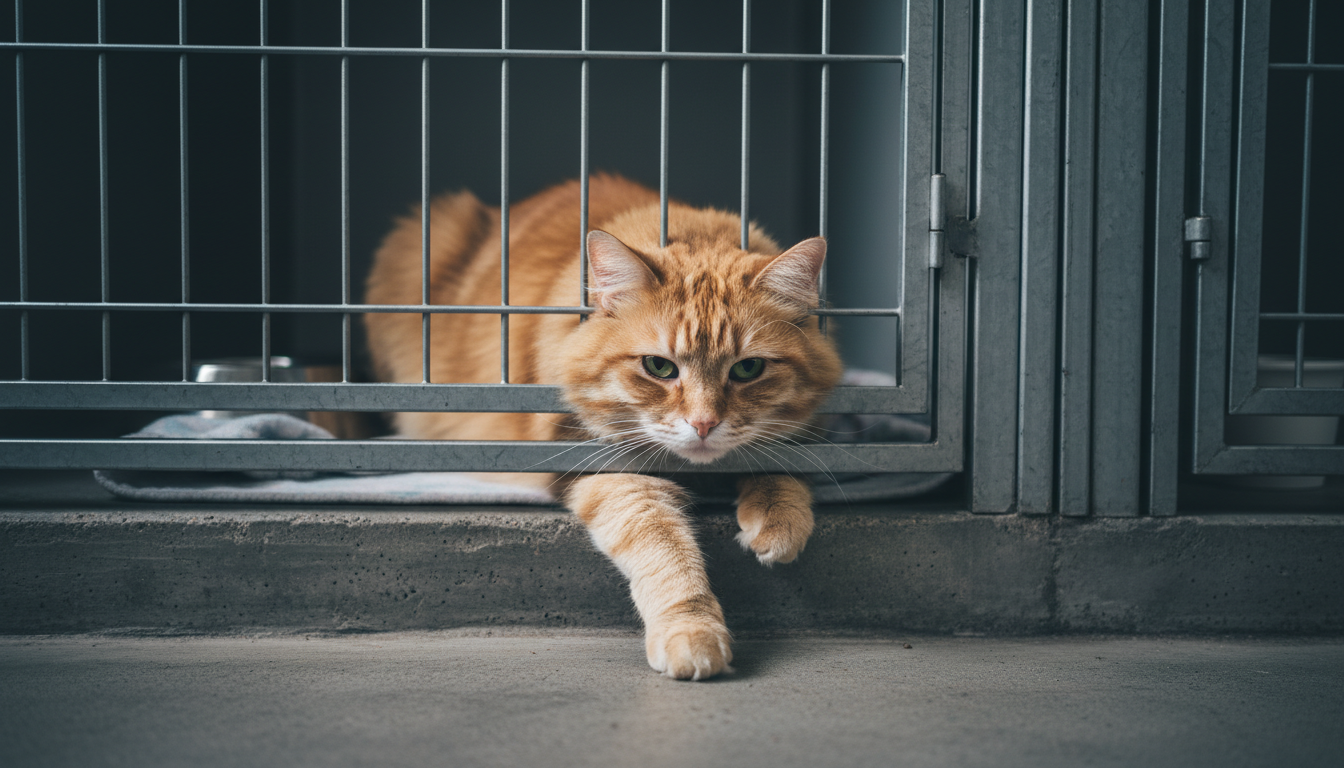
In the high-stakes world of animal rescue, a single photograph can be the difference between a life spent in a kennel and a life spent on a warm couch. Usually, shelter volunteers strive for the perfect shot: ears up, eyes bright, looking attentive and playful. But for one oversized tabby named Barnaby, it wasn’t a picture of perfection that captured the internet’s heart. It was a picture of pure, unadulterated exhaustion.
Barnaby, a senior cat with a history of being overlooked, found himself at a municipal shelter, waiting for a family that never seemed to come. Day after day, potential adopters walked past his cage, often bypassing the older, sleeping cat for the energetic kittens nearby. However, everything changed the moment a volunteer snapped a candid photo that was intended to be a placeholder but ended up becoming a global sensation.
The Photo That Broke the Internet
The image in question didn’t show Barnaby chasing a feather toy or purring at the camera. Instead, it captured him in a moment of profound slump. With his face pressed against the side of his cage and his body looking like a melted loaf of bread, Barnaby embodied a mood that millions of people instantly recognized: burnout.
When the shelter posted the image to social media, they expected a few likes from local supporters. Instead, the post exploded. Within hours, thousands of shares circulated across platforms like Twitter (now X) and Facebook. Users didn’t just see a cat; they saw themselves. Comments flooded in describing Barnaby as “relatable,” with many users joking that the cat looked exactly how they felt on a Monday morning or after a long Zoom meeting.
According to shelter staff, the viral adoption photo worked because it was authentic. It stripped away the curated veneer often seen in pet profiles and showed a creature that was simply tired of waiting. This accidental honesty transformed Barnaby from an invisible senior cat into an internet celebrity overnight.
The Reality of Shelter Photography
Barnaby’s story highlights a critical aspect of modern animal rescue: the power of digital marketing. According to the ASPCA and other animal welfare organizations, the quality and character of an intake photo are among the most significant factors in determining how quickly an animal is adopted. A study on shelter dynamics suggests that animals with high-quality or emotionally resonant photos are adopted significantly faster than those with blurry or indifferent images.
However, getting those photos is not easy. Shelter environments are often fluorescent-lit, loud, and stressful. Animals are frequently scared or shut down. In Barnaby’s case, his “depressed” look was likely a mix of a comfortable nap and the boredom of shelter life, but to the human eye, it read as a desperate plea for a break. This anthropomorphism—attributing human emotions to animal expressions—played a massive role in his sudden fame.
Photography programs like “One Picture Saves a Life” have long advocated for grooming and lighting to help pets look their best. Yet, Barnaby proved that sometimes, imperfection is the ultimate hook. His dishevelled appearance made him stand out in a sea of perfectly posed kittens, drawing attention to the plight of senior cats who often languish in shelters.
A Flood of Applications
The impact of the viral adoption photo was immediate and overwhelming. The shelter, which typically struggled to find homes for senior cats with special dietary needs, suddenly found their inbox crashing under the weight of inquiries. People from different states, and even different countries, offered to drive or fly to pick up the “sad” cat.
Staff members reported that they had to stop accepting applications within 24 hours because the volume was unmanageable. The challenge shifted from finding anyone to take Barnaby, to finding the right person. The shelter needed to ensure that the adopter wasn’t just chasing internet clout but was actually prepared to care for an aging cat who needed veterinary attention and a quiet environment.
This phenomenon is known as the “viral bump” in the rescue community. While it is overwhelmingly positive, rescue coordinators often caution that viral fame can attract impulsive adopters. Therefore, the screening process for Barnaby was rigorous. The shelter looked for a home where he could continue his legendary naps without the stress of cameras or chaos.
The Bond Between Humans and “Relatable” Animals
Why did Barnaby’s slumped shoulders resonate so deeply? Psychologists suggest that humans are hardwired to empathize with vulnerability. When we see an animal that appears down on its luck or physically imperfect, it triggers a nurturing instinct. Furthermore, in an era of high stress and curated social media perfection, seeing an animal that looks “over it” provides a moment of comedic relief and emotional validation.
This is not an isolated incident. Other animals, like the famous “Grumpy Cat” or “Fishtopher” (another shelter cat who went viral for looking sad), have proven that personality quirks often triumph over traditional beauty standards. These stories serve as a reminder that there is a lid for every pot, and sometimes the “broken” looking animals are the ones that heal us the most.
For the staff at the shelter, Barnaby’s success was a morale booster. It proved that even the most difficult-to-place animals have hope. It also served as a valuable lesson in marketing: sometimes, letting the animal’s true personality shine—even if that personality is “grumpy” or “exhausted”—is the best strategy.
A Happy Ending for the “Saddest” Cat
After sifting through piles of applications, the shelter identified a local couple who were experienced with senior pets. They weren’t looking for a meme; they were looking for a companion. When they met Barnaby, the connection was instant. He didn’t perform for them, and they didn’t ask him to. He simply leaned into a head scratch and purred, proving that beneath the viral image was just a sweet, affectionate cat looking for safety.
Barnaby now spends his days in a sunbeam, far away from the metal bars of the shelter cage. His new owners occasionally post updates, showing him looking significantly more dignified, though he still enjoys a good slump on the sofa. His story remains a testament to the power of a single image.
If you are considering adding a pet to your family, remember that the animal hiding in the back of the cage or looking grumpy in their photo might just be waiting for the chance to blossom. As Barnaby proved, sometimes the most unexpected rescue transformations begin with a second look.
Barnaby’s viral fame may have been accidental, but the love he found was very real. It serves as a reminder to potential adopters everywhere: don’t scroll past the sad-looking photos. Stop, look closer, and you might just find your new best friend.